
What Is an Automatic Transfer Switch?
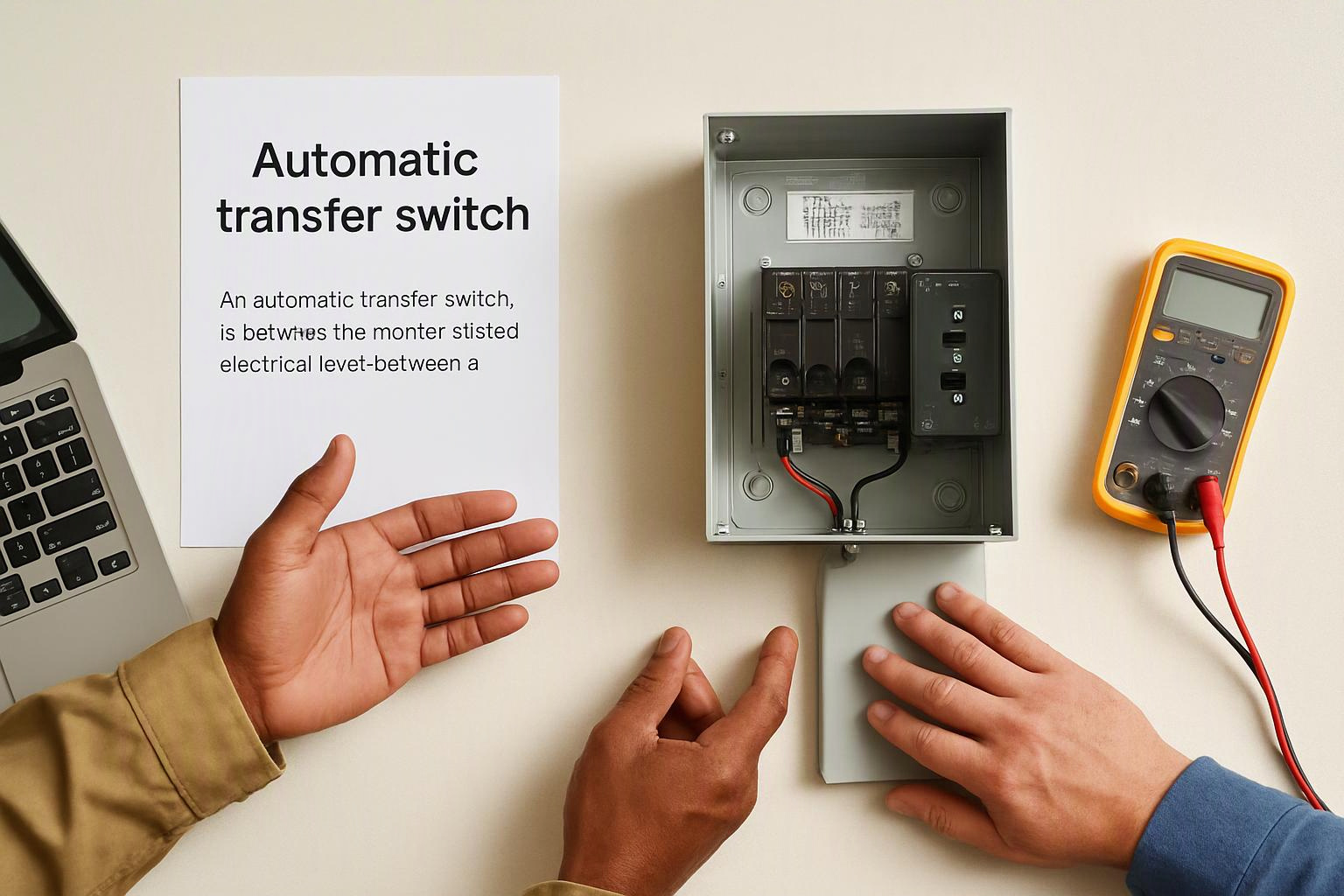
An automatic transfer switch is a device that moves selected electrical loads between a normal utility supply and a standby generator. It senses a loss or return of utility power, then sends a control signal and changes the connected source. The switch also isolates the sources, helping prevent unwanted generator backfeed into utility lines.
Quick Facts About Automatic transfer switch
Category
Generator power-transfer equipment
Used for
Moving selected loads between utility and generator power
Common confusion
Often confused with a manual transfer switch or generator interlock
Also called
ATS, Automatic transfer switchgear
Often discussed with
Generator Repair, Electrical Troubleshooting
Key Takeaways About Automatic transfer switch
- It changes power sources without manual switching.
- Only connected loads receive generator power.
- It is not the same as a generator interlock.
How Automatic transfer switch Works
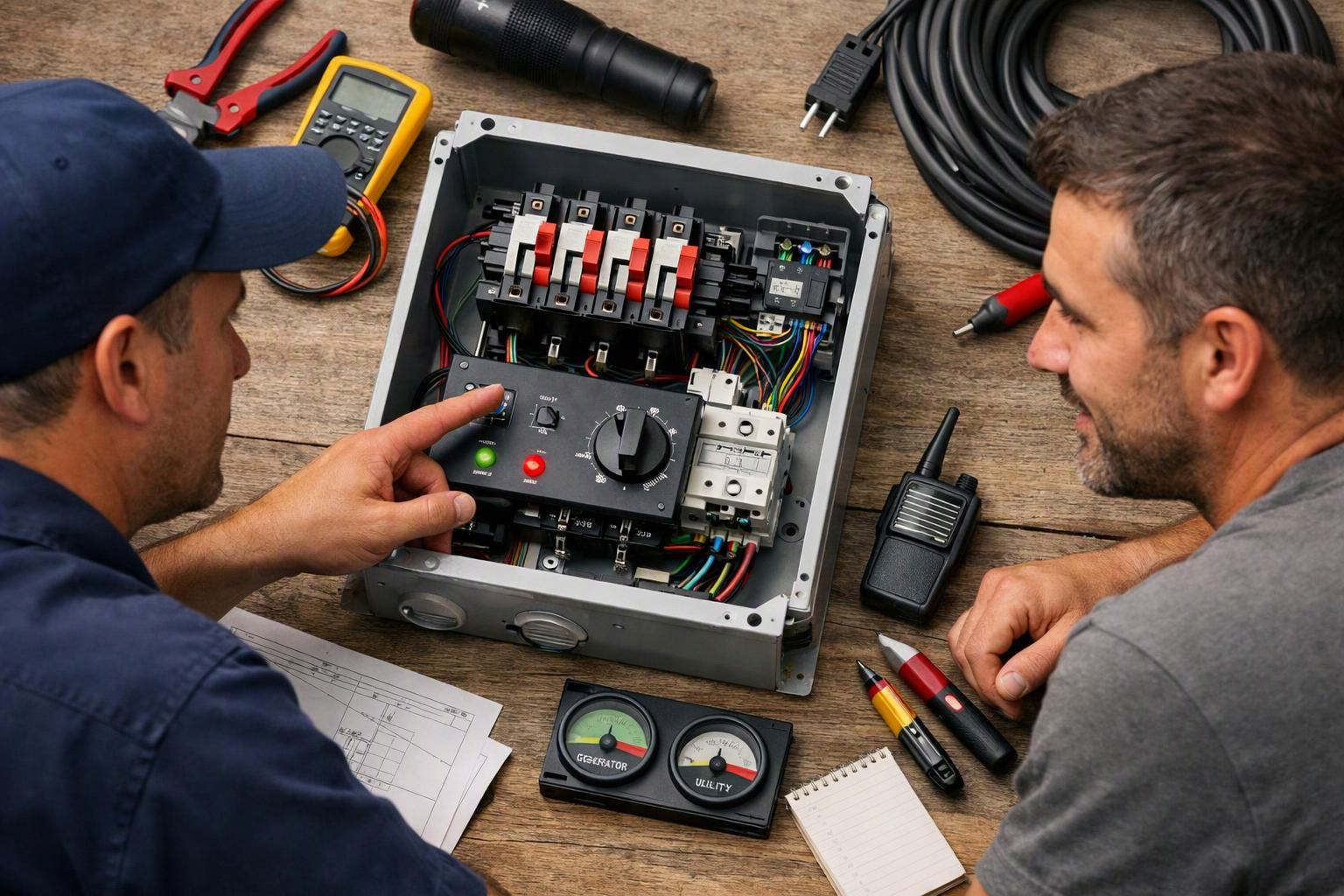
An automatic transfer switch monitors the incoming utility supply and communicates with the standby generator. When the utility source fails or falls outside the switch's operating range, the control system starts the generator and transfers connected circuits after generator power becomes available. When utility power returns, the switch moves those circuits back and signals the generator to stop.
Related glossary terms: Generator interlock, Manual transfer switch, Backfeed.
The switch does not power every circuit automatically. An electrician connects selected loads through the transfer equipment, often including essential lighting, refrigeration, or heating controls. During generator repair, technicians check the control wiring, source connections, transfer mechanism, and load behavior. A generator interlock serves a different role because it mechanically prevents certain breaker positions from being active together, while an automatic transfer switch controls the changeover process.
From the Center Electric Service team
When we inspect an automatic transfer switch, we check its utility sensing, generator start signal, transfer action, and return sequence. Our team also examines terminations and connected loads because a switch may operate correctly while a downstream circuit or control connection still has a fault.
Automatic transfer switch in Practice: A Real-World Example
A home standby generator may support a selected group of circuits during a utility outage. The automatic transfer switch detects the outage, starts the generator, and transfers those circuits without requiring the homeowner to operate a switch.
Related Services
Related Terms
Generator interlock
Generator interlock is a mechanical device installed at an electrical panel to control the position of…
Manual transfer switch
Manual transfer switch is a power transfer device that lets you select whether designated circuits receive…
Backfeed
Backfeed is the unintended flow of electrical power from a generator or secondary source into a…
Main breaker
A main breaker is the primary circuit breaker in an electrical panel. The main breaker controls…
Center Electric Service
Have Questions About Automatic transfer switch?
Contact Center Electric Service for practical guidance on Automatic transfer switch and related 24 hour electrician work in Riverside.