Home Lighting Repair and Installation Services
A lighting repair checklist starts with the symptom, power source, switch, fixture, and wiring condition; Center Electric Service diagnoses the fault, explains the repair or installation scope, and provides Free Estimates Available.
Get a Free Estimate
What Should a Lighting Repair Checklist Include?
Lighting repair starts with the symptom and follows the circuit from the power source to the switch, wiring, and light fixture. Center Electric Service uses this process to locate the fault before we recommend repair work.
Heat, sparks, electrical arcing, burning odors, and repeated breaker trips are reasons to stop using the circuit. We inspect the circuit and complete the safe repair without asking you to work inside electrical boxes.
Which Common Light Problems Need Repair?
Common lighting problems that need repair include flickering, a switch that feels hot or loose, a fixture that stays dark after the bulb is checked, and a circuit breaker that trips when the light operates.
A dead light may come from the bulb, socket, switch, wiring, or circuit. Intermittent lighting can point to a loose connection, damaged component, or overloaded circuit. We test the affected parts and identify the fault before replacing anything.
Our Light Switch Repair service covers unsafe or unreliable controls. We also inspect the surrounding wiring when switch symptoms suggest a wider circuit problem.
When Does a Light Switch Need Repair?
Light switch repair is needed when a wall switch feels hot, moves loosely, makes a crackling sound, or works only sometimes. Electrical arcing can damage the switch and nearby wiring.
We inspect the switch wiring, connections, box, and circuit condition. A switch that shows heat or arcing should stay off until Center Electric Service checks it.
How Should You Plan a Dimmer Switch Installation?
Dimmer switch installation should match the dimmer to the lighting load, bulb type, switch arrangement, and existing wiring. Center Electric Service checks compatibility before installing the control.
A dimmable LED needs a compatible dimmer and suitable load range. The switch box must have enough room for the device and its connections. We also check whether the control is part of a multi-way switch arrangement.
Load compatibility matters because an unsuitable dimmer can cause flickering, buzzing, poor dimming, or excess heat. We assess the circuit and explain the compatible control options before installation.
What Should You Check Before Installing a Light Fixture?
Light fixture installation requires a check of the mounting point, junction box, wiring condition, grounding path, fixture weight, and circuit suitability. These checks help us plan a safe installation.
We also review the fixture instructions and the access needed for the work. Unsafe mounting, damaged wiring, or missing grounding can change the installation scope.
How Do Recessed Lighting Projects Differ From Fixture Replacement?
Recessed lighting installation involves ceiling layout, housing placement, access, insulation conditions, and wiring pathways. The work needs more planning than replacing an accessible fixture.
| Project factor | Accessible fixture replacement | Recessed lighting installation |
|---|---|---|
| Layout | Uses an existing mounting location. | Requires a planned ceiling layout and spacing. |
| Ceiling access | Usually centers on the existing fixture opening. | May require access above or through the ceiling. |
| Housing | Keeps the existing fixture support when suitable. | Needs housing selected for the ceiling and insulation conditions. |
| Wiring pathway | Connects to the existing fixture wiring. | May require new pathways between housings and controls. |
| Controls | Uses the current switch when compatible. | May add a switch control or dimmer for the new layout. |
Our team checks joist locations, insulation clearance, ceiling access, housing type, trim selection, switch control, and the existing circuit. We also confirm that the planned installation fits the ceiling structure and wiring route.
When Do Landscape and Security Lighting Need Installation Planning?
Landscape lighting installation and security lighting installation need planning for fixture placement, control method, weather exposure, wiring route, visibility, and the purpose of each illuminated area.
Landscape lighting may use low-voltage lighting to guide paths, highlight planting areas, or improve outdoor use. We plan the fixture positions, conduit or cable route, transformer location when needed, and protection from weather exposure.
Security lighting installation focuses on clear coverage around entries, walkways, gates, and other areas that need visibility. We can assess whether a photocell, motion sensor, timer, or motion-activated lighting best fits the purpose.
Exterior lighting needs suitable weather-resistant fixtures and protected connections. We review lighting controls and the route before we install the system.
When Do Lighting Repair and Installation Belong in the Same Project?
Lighting repair and installation belong in the same project when the new work depends on an existing circuit, switch, junction box, or wiring condition. Combining related work can also reduce repeated access and help keep the project scope clear.
We assess circuit capacity and wiring before combining the work. That approach helps us set a safe installation sequence and explain which repairs are required for the new lighting.
How Do Lighting Repair and Installation Work Together?
Lighting repair and installation work together when electrical diagnosis guides the installation sequence. Our team uses the circuit assessment to define a practical project scope.
Repair sequence and installation sequence depend on the condition of the existing system. We explain the work in plain terms so you know which items are required and which choices affect the project.
What Does Center Electric Service Check Before Quoting Lighting Work?
Center Electric Service checks the existing circuit, wiring, controls, mounting location, access, fixture requirements, and requested finish before explaining the work scope and preparing a quote; Free Estimates Available.
We review the lighting inspection findings, circuit condition, access requirements, fixture selection, switch compatibility, and installation scope. Our team also separates the repair scope from optional fixture or control choices.
The quote reflects the work needed for the actual property conditions. We explain the materials, access needs, wiring work, mounting support, and testing included in the proposed scope.
What Are the Warning Signs That a Ceiling Fan Needs Repair?
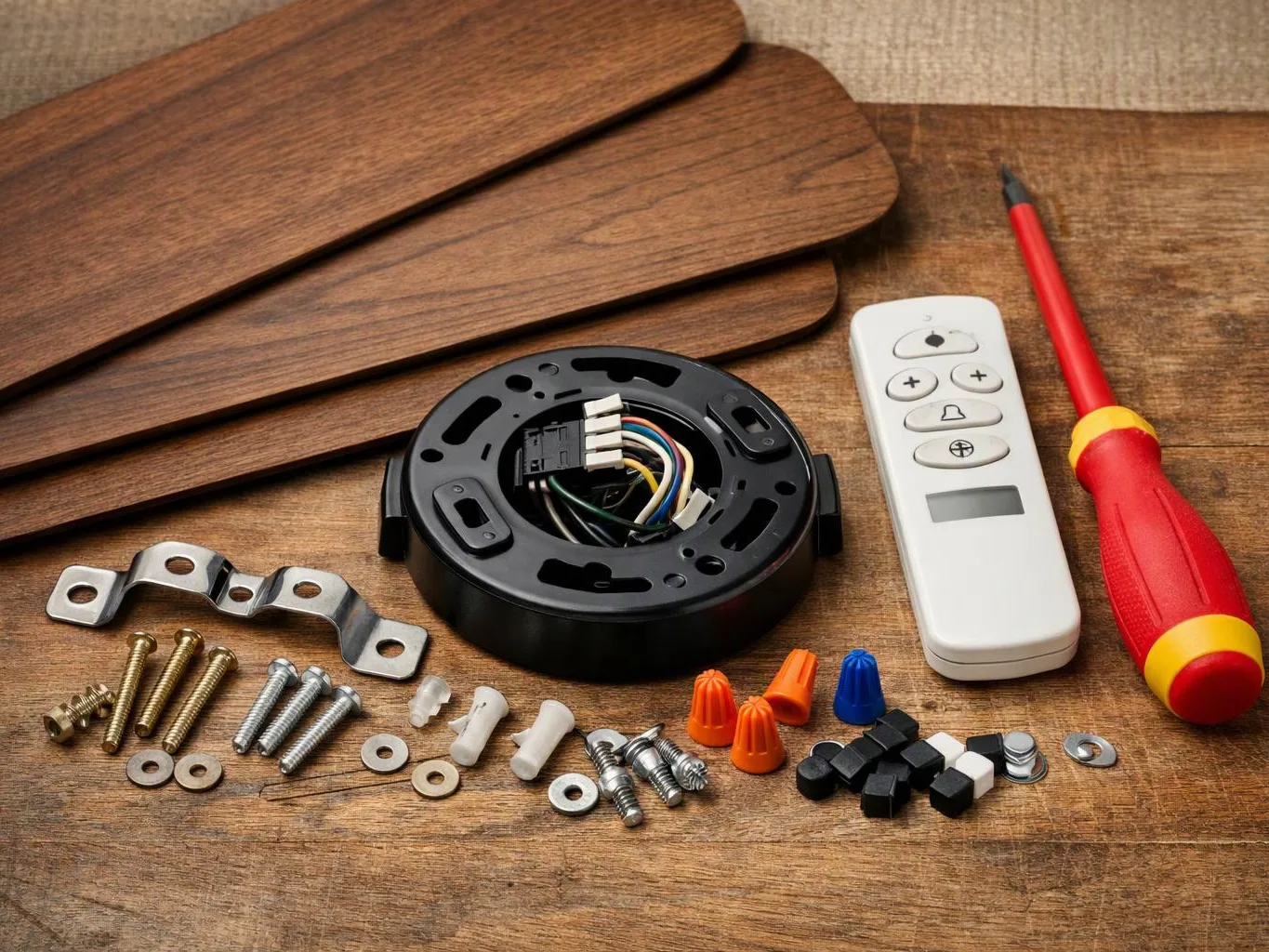
Ceiling fan repair may be needed when a ceiling fan wobbles, makes unusual noises, operates intermittently, produces a burning odor, or stops responding to its switch or control.
A wobbling fan may have a balance, mounting, blade, or support problem. Unusual noise can involve the motor, fan capacitor, loose hardware, or another worn component. We inspect the fan and its support before recommending repair.
A burning odor or intermittent operation needs prompt attention. We check the fan switch, motor connections, controls, and ceiling box, then confirm safe operation after the repair.
What Should a Ceiling Fan Installation Checklist Cover?
Ceiling fan installation should cover the support box, mounting hardware, wiring, control method, ceiling conditions, clearance, and safe operation.
We select the support and control method based on the fan and the room. Our crew also checks the finished installation for movement, noise, and reliable operation.
What Changes the Cost of a Lighting Repair or Installation Project?
Lighting project cost changes with the fault location, fixture or control type, wiring condition, access, circuit requirements, installation complexity, and selected materials. Center Electric Service can assess those factors and prepare an exact quote.
A repair may involve a switch, fixture, junction box, circuit, or hidden wiring. An installation may involve ceiling access, mounting support, new wiring, controls, or circuit capacity. We identify these conditions before setting the project scope.
To request a quote, provide the lighting symptom or project goal, the affected room or outdoor area, the fixture or control you want, and any known breaker or switch behavior. We use that information to plan the inspection and explain the work included.
For home lighting repair and installation, contact Center Electric Service through our contact page. We will review the requested work and provide Free Estimates Available.
Questions About Home Lighting Repair and Installation
Can a dimmer switch be installed on any light?
No, a dimmer switch cannot be installed on any light because the bulb, fixture, load, wiring, and switch arrangement must be compatible. Center Electric Service checks the dimmable LED or other bulb type, control setup, and circuit before we install the dimmer.
Why does a light switch feel hot?
A hot light switch can signal an overloaded circuit, loose connection, incompatible dimmer, or electrical arcing. Stop using the switch and have Center Electric Service inspect the control and wiring.
Why does a light fixture keep flickering after the bulb is replaced?
A light fixture can keep flickering after a bulb replacement because the fault may involve the socket, switch, dimmer, loose connection, fixture, or circuit. We test the lighting path to find the cause instead of replacing bulbs without checking the system.
Can recessed lighting be added to an existing ceiling?
Yes, recessed lighting can be added to an existing ceiling when the layout, housing, insulation clearance, ceiling access, wiring path, and circuit support the plan. We inspect those conditions before designing the installation.
What should I do if a ceiling fan wobbles or makes noise?
Stop using a ceiling fan that wobbles severely, makes unusual noise, or produces a burning odor until the support, blades, motor, and controls are checked. We inspect the fan and mounting system to identify whether repair or replacement is needed.
What information should I provide when requesting a lighting repair quote?
Provide the affected room or area, the lighting symptom, the switch or breaker behavior, the fixture or control involved, and any burning odor or visible damage. Photos and fixture details can also help us understand the requested scope before the inspection.