
What Is Bonding?
Bonding is the intentional connection of conductive metal parts so those parts remain at the same electrical potential. In pool electrical work, bonding connects metal components such as a pool shell, ladder, handrail, equipment housing, and reinforcing steel to a bonding network. The network helps provide a controlled path for unwanted electrical current.
Quick Facts About Bonding
Category
Electrical safety connection
Used for
Equalizing electrical potential
Common confusion
Bonding is not grounding
Also called
Electrical bonding, Equipotential bonding
Often discussed with
Pool Electrical Installation, Electrical Safety Inspection
Key Takeaways About Bonding
- Bonding connects metal parts, while grounding connects an electrical system to earth.
- Pool equipment and nearby metal components may need coordinated bonding.
- Bonding is not the same as grounding or circuit protection.
How Bonding Works
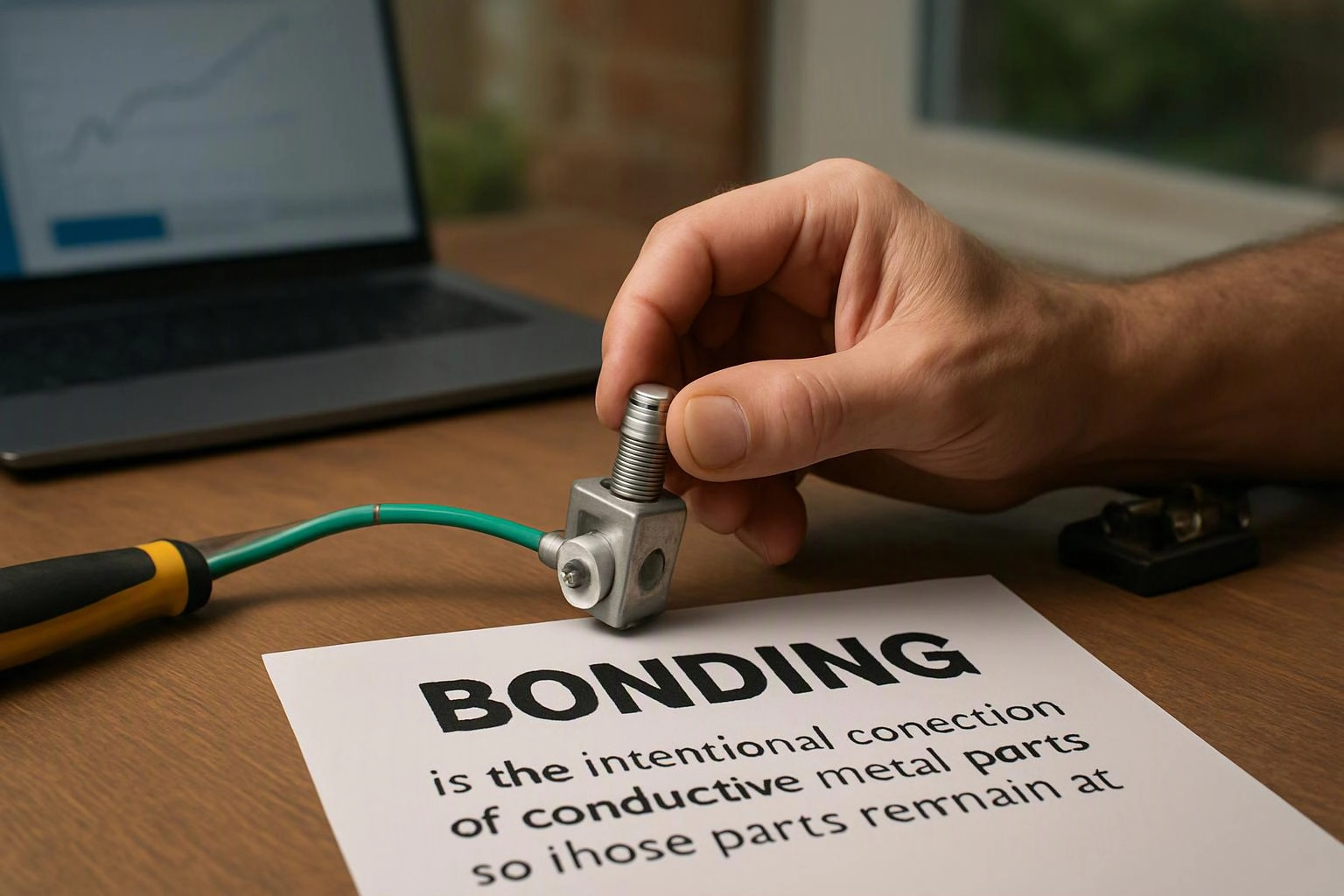
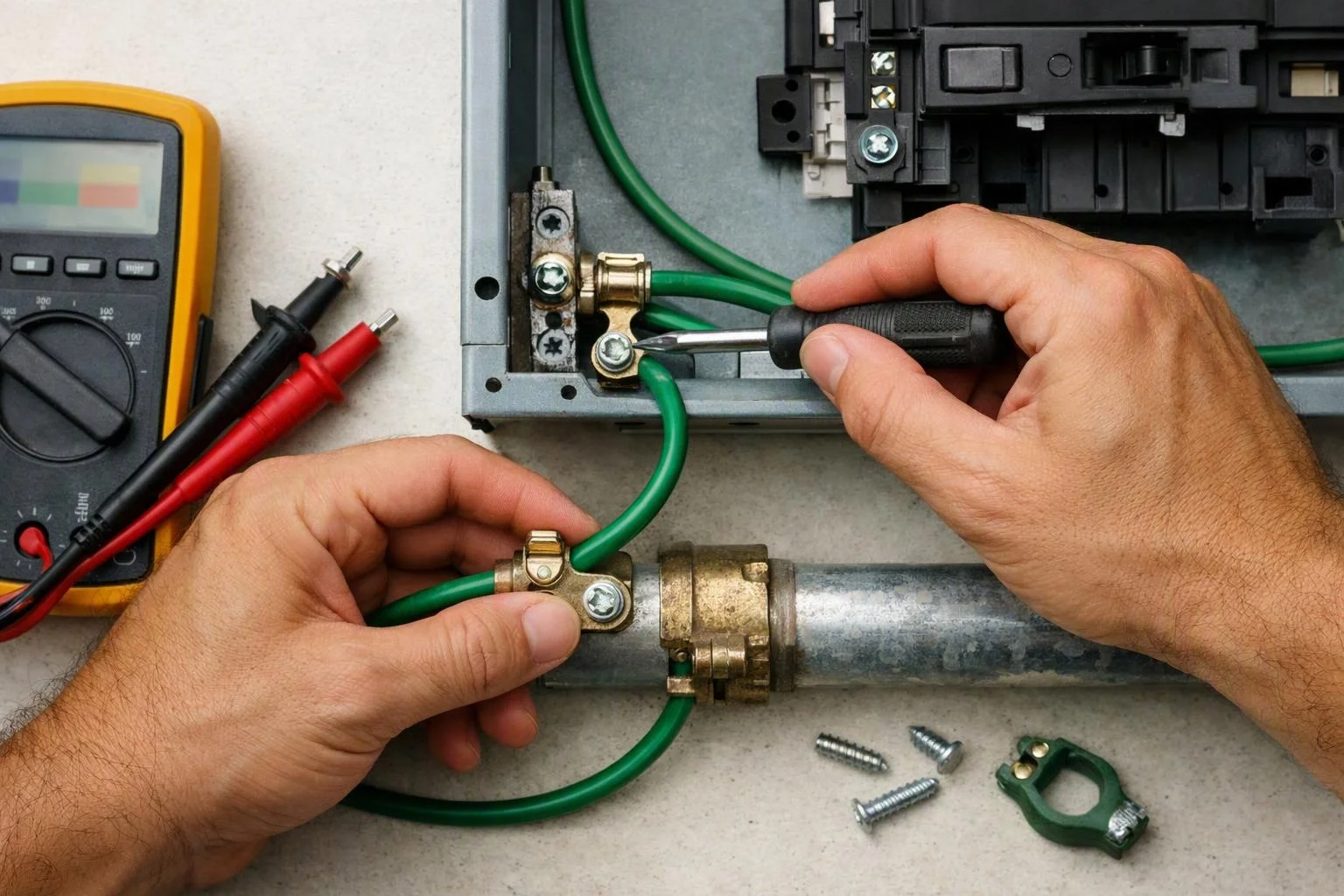
Bonding creates an electrically continuous connection between conductive parts that could develop different voltages. A bonding conductor joins selected metal components into one network. Continuity through that network is checked with test equipment so a loose connection or break can be identified.
Related glossary terms: Electrical Grounding, Continuity Test, Underwater Pool Light.
Pool electrical installations may include a metal pool shell, reinforcing steel, ladders, handrails, light niches, pumps, heaters, and other conductive equipment. The bonding network does not operate as the circuit's normal return path. Grounding connects equipment to earth and supports fault-current clearing through the electrical system. Bonding and grounding work together, but they perform different functions.
From the Center Electric Service team
When we work on Pool Electrical Installation, we identify conductive pool components and check that the bonding connections form a continuous network. We inspect connection points for secure contact and verify continuity with suitable test equipment. Our team also separates bonding checks from grounding and circuit-protection checks.
Bonding in Practice: A Real-World Example
A pool installation includes a metal handrail, a pump housing, and a conductive pool shell. The electrician connects those components to the bonding network and checks continuity so the connected metal parts remain at a consistent electrical potential.
Related Terms
Electrical Grounding
Electrical grounding is a protective connection between an electrical system and the earth or another approved…
Continuity Test
A Continuity Test is an electrical check that determines whether a complete, low-resistance path exists between…
Underwater Pool Light
An underwater pool light is a sealed lighting fixture designed for installation beneath the waterline of…
Ground-Fault Circuit Interrupter
A Ground-Fault Circuit Interrupter is a protective electrical device that monitors current flowing through a circuit…
Center Electric Service
Have Questions About Bonding?
Contact Center Electric Service for practical guidance on Bonding and related electrical services work in Riverside.