
What Is Electrical Grounding?
Electrical grounding is a protective connection between an electrical system and the earth or another approved reference point. The connection gives unwanted electrical current a controlled path during a fault. Grounding also helps stabilize system voltage and supports protective devices that interrupt power when a dangerous fault develops.
Quick Facts About Electrical Grounding
Category
Electrical safety method
Used for
Fault-current control and voltage stability
Common confusion
Grounding and bonding are related but different
Also called
Grounding, Equipment grounding
Often discussed with
Electrical Safety Inspection
Key Takeaways About Electrical Grounding
- Grounding connects an electrical system to earth or a reference point.
- A grounding path supports fault-current clearing.
- Grounding is not the same as the neutral conductor.
How Electrical Grounding Works
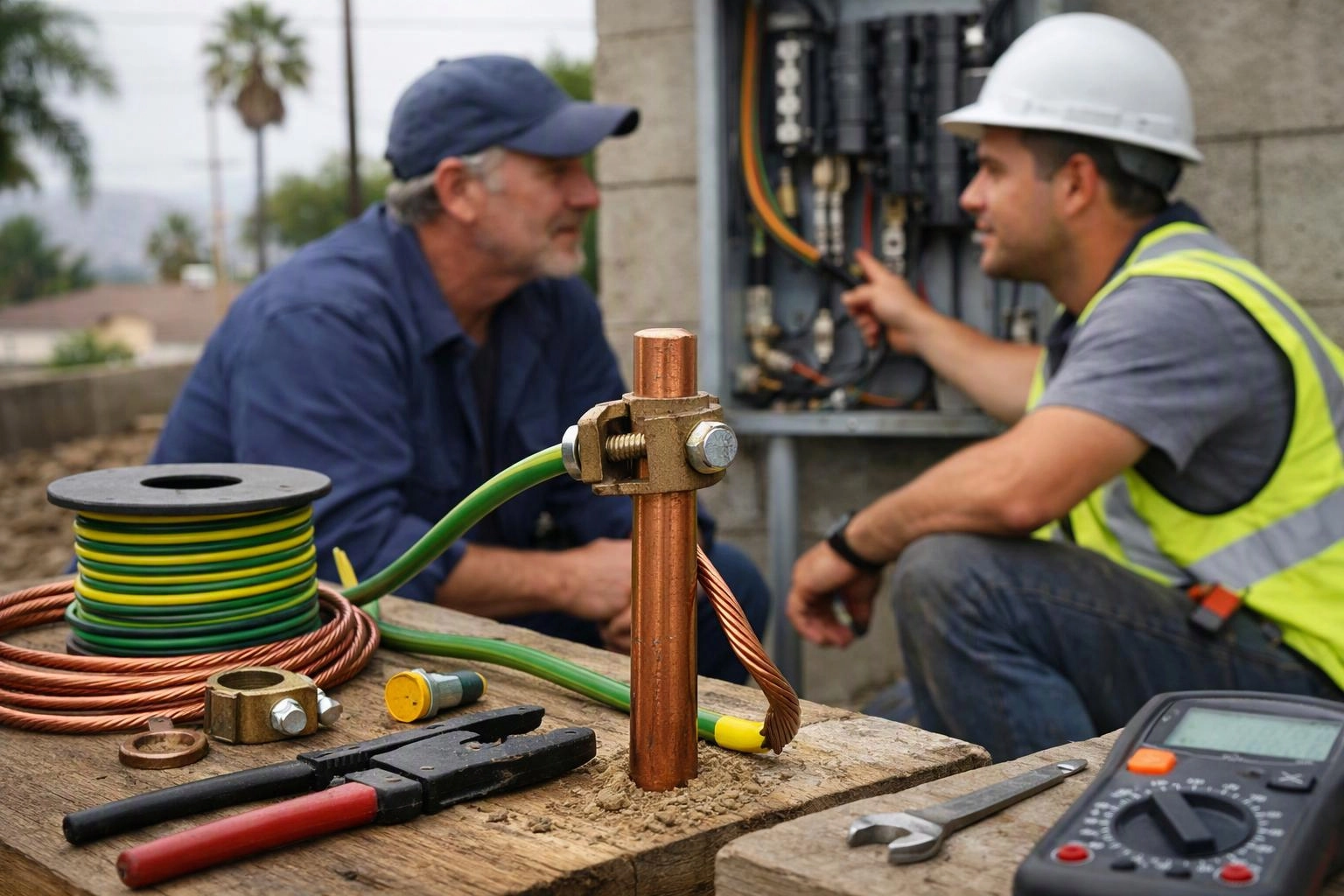
Electrical grounding creates a low-impedance path for unwanted current during an electrical fault. The path may connect equipment grounding conductors, metal enclosures, and a grounding electrode system. Protective equipment can then sense abnormal current and disconnect the affected circuit.
Related glossary terms: Bonding, Continuity Test, Ground-Fault Circuit Interrupter.
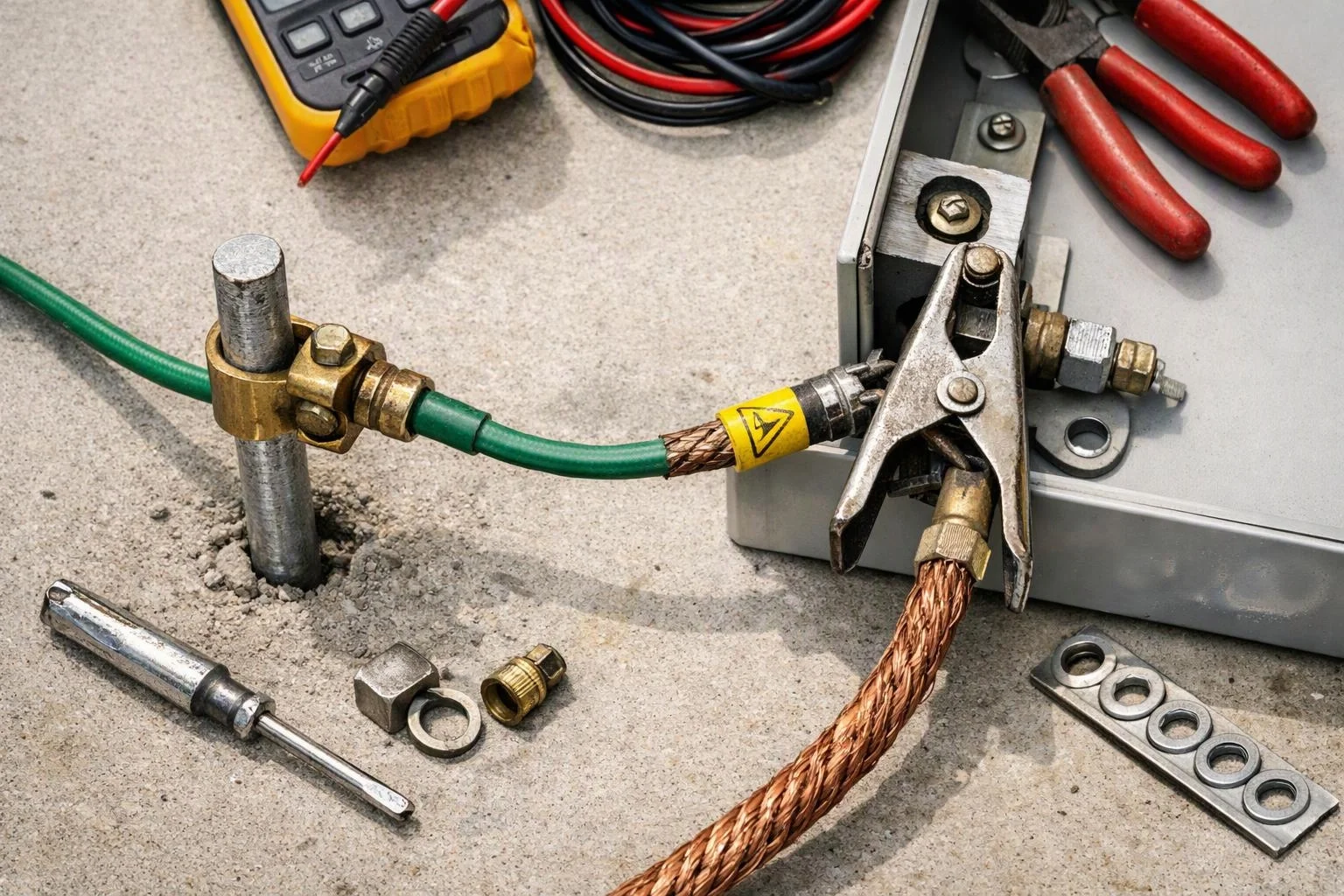
Grounding works with bonding, which joins conductive metal parts so they remain at a similar electrical potential. A grounding electrode, such as a component connected to the earth, provides a reference for the electrical system. Electricians inspect conductor connections, termination points, and continuity to confirm that the grounding path remains connected through the equipment.
From the Center Electric Service team
When we inspect electrical grounding, we trace the grounding path from equipment back through the circuit and service equipment. We check terminations, bonding points, and continuity so the path remains electrically connected. We also look for loose connections, damaged conductors, or metal parts that lack an effective grounding connection.
Electrical Grounding in Practice: A Real-World Example
During an Electrical Safety Inspection, a technician examines a receptacle, its grounding conductor, and the connected panel equipment. The inspection can identify a missing or interrupted grounding path that may prevent protective equipment from clearing a fault properly.
Related Services
Related Terms
Bonding
Bonding is the intentional connection of conductive metal parts so those parts remain at the same…
Continuity Test
A Continuity Test is an electrical check that determines whether a complete, low-resistance path exists between…
Ground-Fault Circuit Interrupter
A Ground-Fault Circuit Interrupter is a protective electrical device that monitors current flowing through a circuit…
Neutral Wire
A neutral wire is a current-carrying conductor that provides the return path from a connected load…
Center Electric Service
Have Questions About Electrical Grounding?
Contact Center Electric Service for practical guidance on Electrical Grounding and related electrical services work in Riverside.