
What Is a Branch Circuit?
Branch Circuit is a wiring path that carries electricity from a panelboard overcurrent device to connected outlets, switches, fixtures, or equipment. The circuit includes the ungrounded conductors, grounded conductor when present, and equipment grounding path. Its design matches the connected load, conductor capacity, protective device, and wiring method used in the building.
Quick Facts About Branch Circuit
Category
Electrical distribution component
Used for
Powering outlets, lighting, and equipment
Common confusion
Often confused with a feeder
Also called
Electrical branch circuit, Branch wiring circuit
Often discussed with
Electrical Rewiring, Electrical Troubleshooting
Key Takeaways About Branch Circuit
- It serves equipment beyond the main service conductors.
- Its wiring must match the connected electrical load.
- A branch circuit is not the same as a feeder.
How Branch Circuit Works
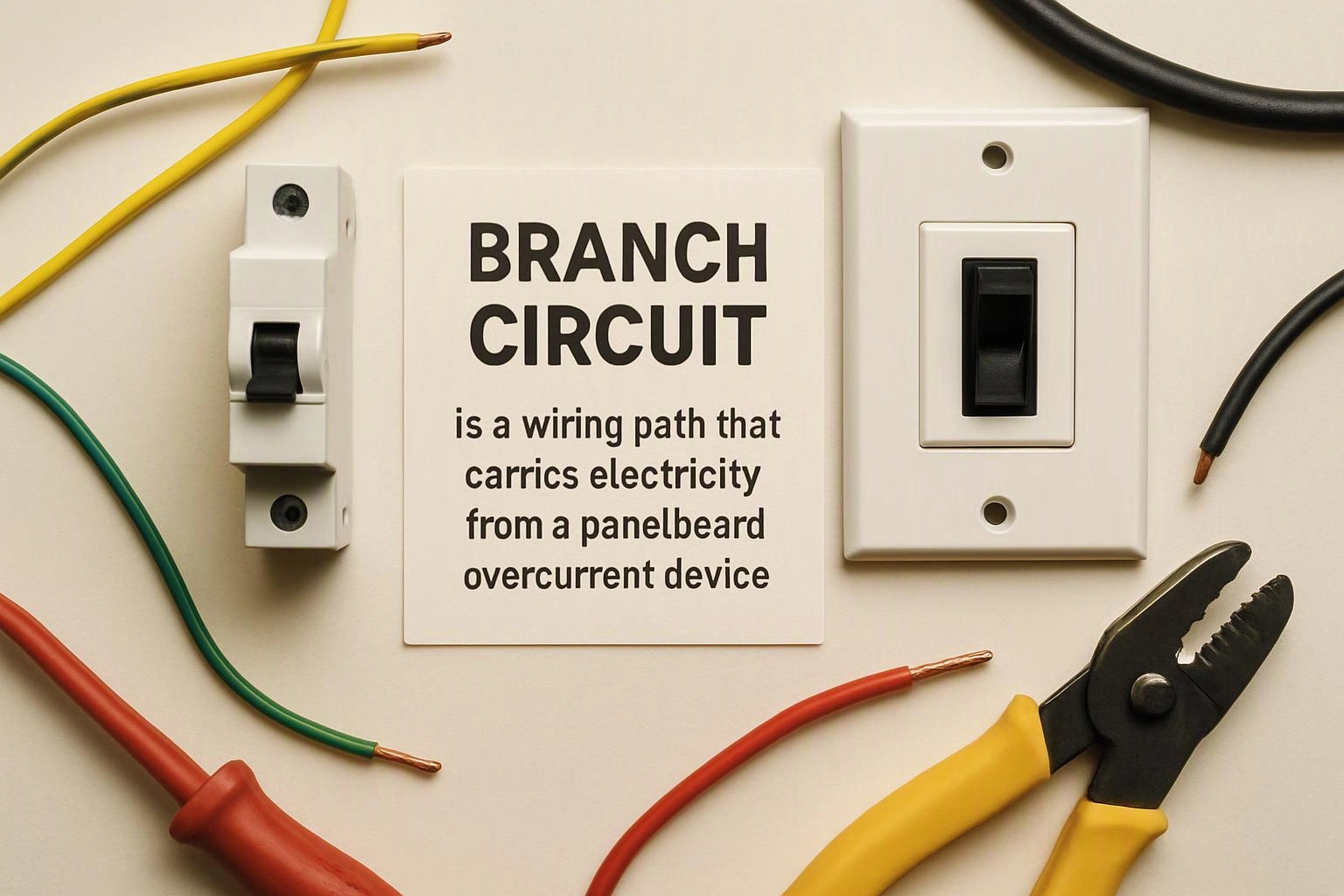
A branch circuit begins at a circuit breaker or fuse in the electrical panel and continues to the points that use power. Current travels through the ungrounded conductor to a load, then returns through the grounded conductor when the circuit design includes one. The equipment grounding path helps provide a route for fault current.
Related glossary terms: Electrical Load, Single-Pole Breaker, Wire Gauge.
Branch circuits may supply receptacles, lighting, fixed appliances, or dedicated equipment. A feeder supplies power to another panel or distribution point, while a branch circuit serves the final connected loads. During rewiring, the wiring route, connections, protective device, and connected equipment are checked together because each part affects circuit performance.
From the Center Electric Service team
When we work on electrical rewiring, we trace each branch circuit from the panel to its connected outlets, switches, and equipment. We check conductor condition, terminations, grounding paths, and circuit assignments before planning replacement wiring. This helps us identify shared loads, abandoned wiring, and connections that need correction.
Branch Circuit in Practice: A Real-World Example
A Riverside home may have a branch circuit running from the electrical panel to several bedroom receptacles and a light fixture. During electrical rewiring, the circuit path is identified, damaged wiring is removed, and the replacement connections are matched to the equipment served.
Related Services
Related Terms
Electrical Load
Electrical load is the amount of power that connected devices and equipment draw from a circuit…
Single-Pole Breaker
A single-pole breaker is a panel device that protects a branch circuit connected to a single…
Wire Gauge
Wire Gauge is a standardized way to describe the diameter and current-carrying capacity of an electrical…
Ampacity
Ampacity is the maximum electrical current a conductor can carry safely under stated conditions. The rating…
Center Electric Service
Have Questions About Branch Circuit?
Contact Center Electric Service for practical guidance on Branch Circuit and related 24 hour electrician work in Riverside.