
What Is a Single-Pole Breaker?
A single-pole breaker is a panel device that protects a branch circuit connected to a single hot conductor. The breaker opens the circuit when current exceeds the circuit’s safe capacity. This action limits overheating and helps protect wiring and connected equipment. Single-pole breakers commonly serve lighting, receptacles, and other standard household loads.
Quick Facts About Single-Pole Breaker
Category
Circuit protection device
Used for
Lighting and standard receptacle circuits
Common confusion
Confused with a two-pole breaker
Also called
Single-pole circuit breaker, Single-line breaker
Often discussed with
Circuit Breaker Replacement, Electrical Troubleshooting
Key Takeaways About Single-Pole Breaker
- A single hot conductor connects the breaker to its branch circuit.
- The breaker opens during an overcurrent condition.
- A single-pole breaker is not a substitute for a two-pole breaker.
How Single-Pole Breaker Works
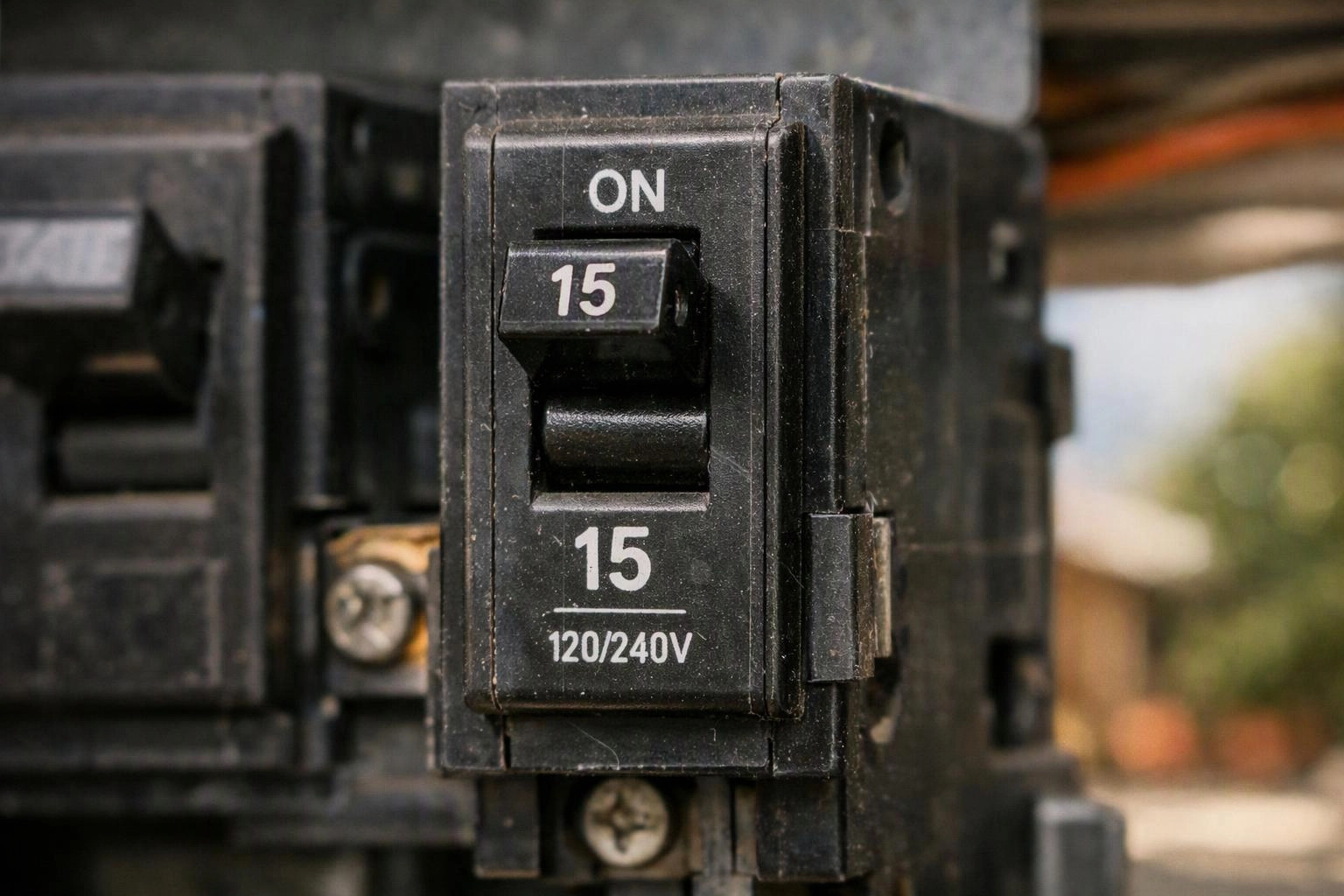
A single-pole breaker monitors current moving through a branch circuit. Under normal conditions, current passes from the panel through the breaker and into connected wiring. If the circuit draws excessive current, the breaker trips and separates the circuit from the panel busbar.
Related glossary terms: Branch Circuit, Overcurrent, Busbar.
The breaker handle also provides a way to disconnect the circuit during service. Its rating must match the circuit wiring and intended load. A branch circuit served by this device may feed lighting, receptacles, or fixed equipment that does not require a multi-pole connection.
From the Center Electric Service team
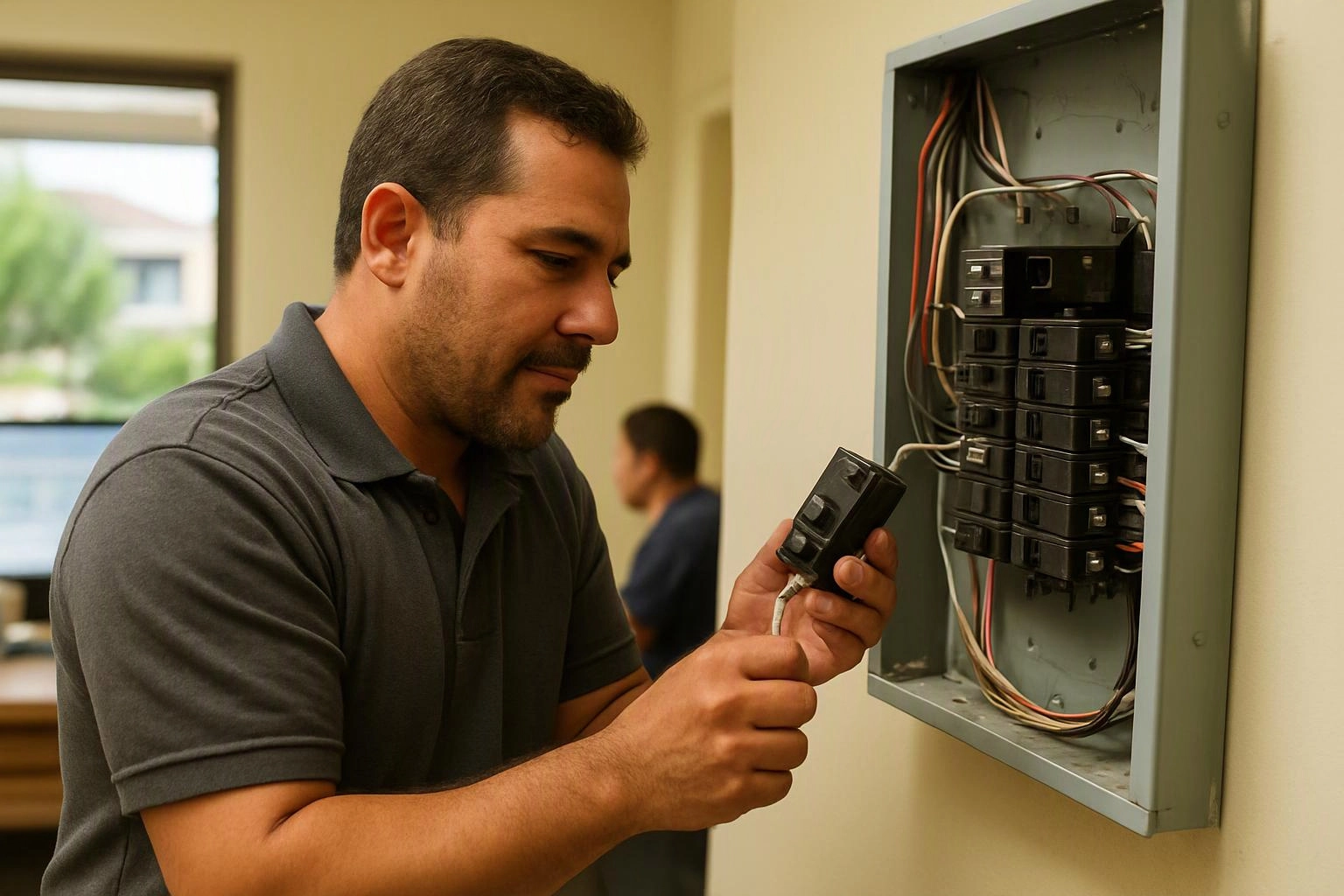
When we replace a single-pole breaker, we inspect the breaker connection, conductor condition, and panel position. We also check whether the circuit has signs of overheating or repeated tripping before installing a compatible replacement. A replacement does not resolve an overloaded circuit or damaged wiring by itself.
Single-Pole Breaker in Practice: A Real-World Example
A Riverside homeowner has a lighting circuit that trips after a breaker develops heat damage. During Circuit Breaker Replacement, the electrician checks the circuit and installs a compatible single-pole breaker when the wiring and load support that device.
Related Terms
Branch Circuit
Branch Circuit is a wiring path that carries electricity from a panelboard overcurrent device to connected…
Overcurrent
Overcurrent is an electrical condition in which current exceeds the level a circuit, conductor, or device…
Busbar
A busbar is a conductive metal bar or strip that distributes electrical power within equipment such…
Hot Wire
A hot wire is an energized conductor that carries electrical potential from a power source toward…
Center Electric Service
Have Questions About Single-Pole Breaker?
Contact Center Electric Service for practical guidance on Single-Pole Breaker and related 24 hour electrician work in Riverside.