
What Is a Bus Duct?
Bus Duct is a factory-assembled electrical distribution system that carries power through enclosed metal housing. It contains insulated or separated busbars that connect equipment across commercial or industrial spaces. Bus duct can replace multiple large conductors in suitable layouts, support organized power distribution, and provide access points for approved plug-in devices.
Quick Facts About Bus Duct
Category
Electrical distribution equipment
Used for
Commercial power distribution
Common confusion
Often confused with cable tray
Also called
Busway, Busbar Trunking
Often discussed with
Commercial Electrical Installation, Commercial Electrical Repair
Key Takeaways About Bus Duct
- Enclosed busbars carry power through a structured distribution path.
- Tap-off units can connect equipment at selected locations.
- Bus duct is not the same as cable tray.
How Bus Duct Works
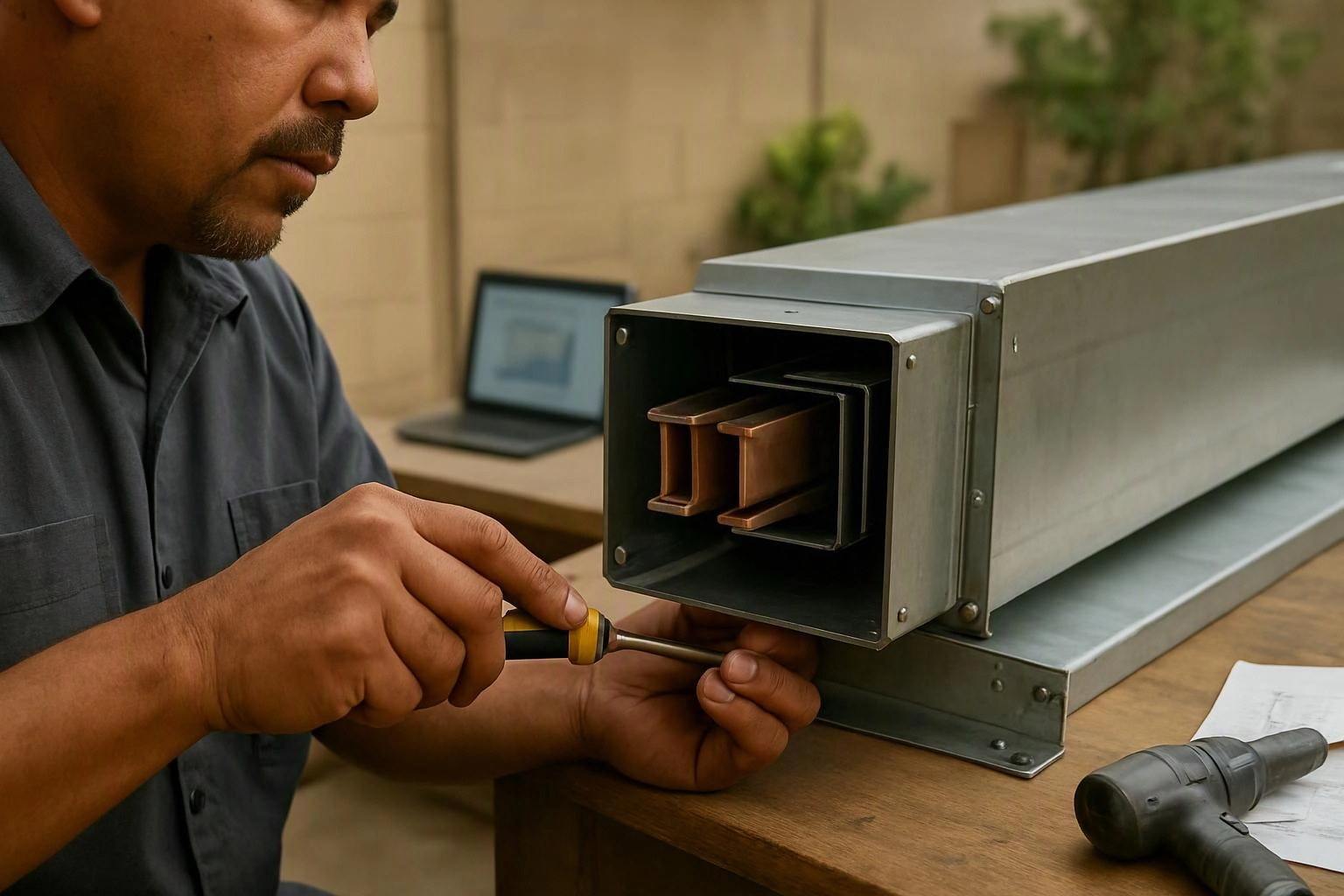
Bus Duct carries electrical power through rigid busbars housed inside a metal enclosure. The busbars connect to a source such as switchgear or a panel. Sections join together along a planned route, so power can move through a building without routing separate large conductors to every location.
Related glossary terms: Busbar, Cable Tray, Electrical Load.
Tap-off units connect loads at selected points along the bus duct. These units can supply equipment such as distribution panels, motors, or machinery. The system must match the electrical load, available space, connection method, and equipment layout. A bus duct route also needs suitable supports and clear access for inspection.
Bus Duct in Commercial Installation
Commercial Electrical Installation may use bus duct where several loads need power along a defined path. For example, a facility can place a main bus duct run near production equipment and connect local panels at planned access points. Cable tray supports cables, while bus duct carries power through enclosed conductors.
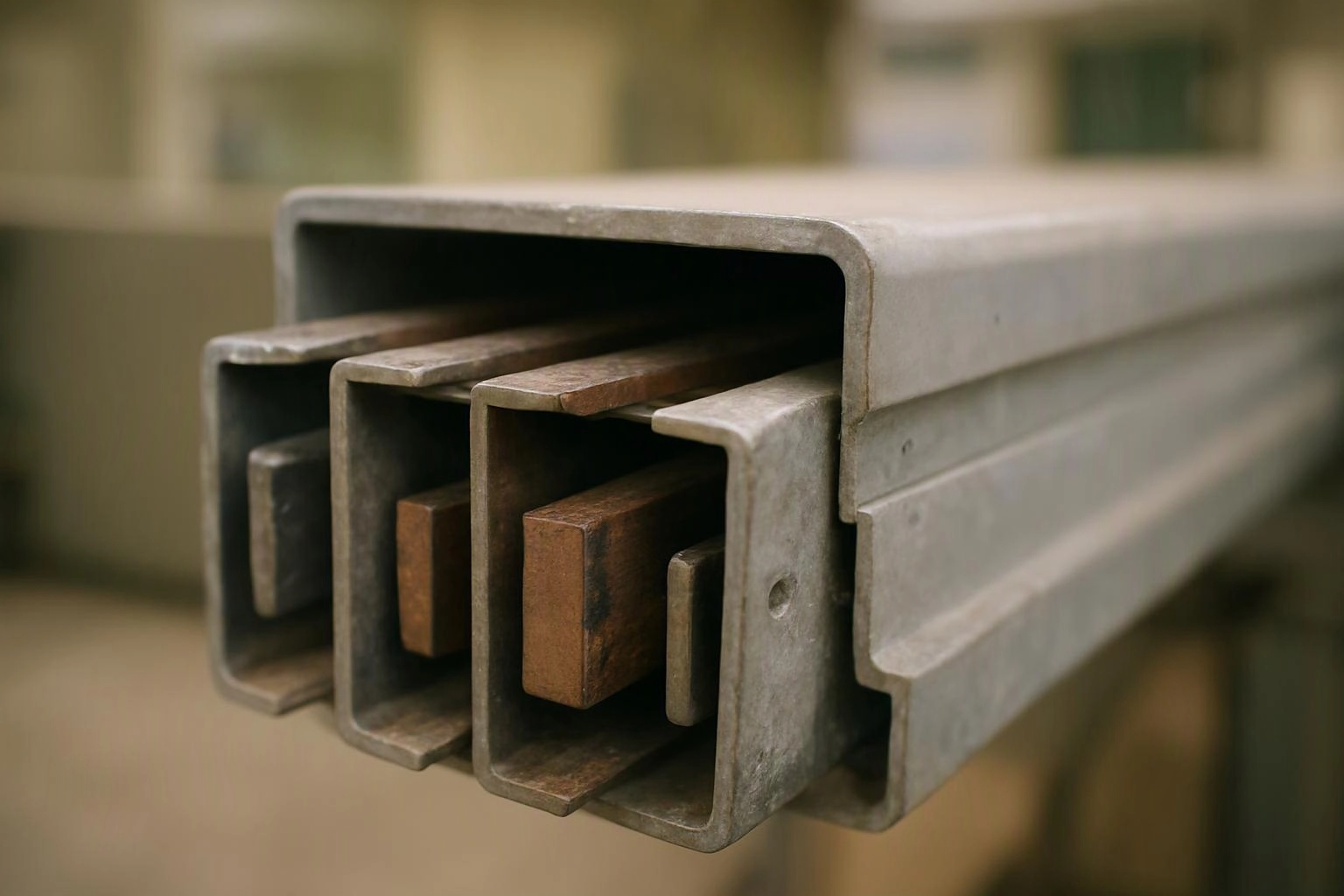
From the Center Electric Service team
When we work with bus duct, we review the route, connections, enclosure condition, and equipment loads. Our team checks that joints and tap-off points align with the installation plan. We also look for physical damage, loose connections, and access issues before connecting downstream equipment.
Bus Duct in Practice: A Real-World Example
A commercial facility may install bus duct along a service corridor to distribute power to several equipment areas. Tap-off units can connect local panels at planned locations without routing separate feeder conductors across the entire space.
Related Terms
Busbar
Busbar is a rigid metal conductor inside an electrical panel that distributes power between the main…
Cable Tray
A cable tray is a support system that routes and protects electrical cables in commercial and…
Electrical Load
Electrical Load is the amount of power that connected devices and equipment draw from an electrical…
Three-Phase Power
Three-Phase Power is an electrical distribution method that uses three alternating voltage waves with matched frequency…
Center Electric Service
Have Questions About Bus Duct?
Contact Center Electric Service for practical guidance on Bus Duct and related electrical services work in Riverside.