
What Is Three-Phase Power?
Three-Phase Power is an electrical distribution method that uses three alternating voltage waves with matched frequency and offset timing. The arrangement delivers a steadier flow of energy for motors and larger commercial equipment. It can support substantial electrical loads with balanced operation across the system when the equipment and wiring are properly designed.
Quick Facts About Three-Phase Power
Category
Electrical distribution method
Used for
Commercial equipment and motors
Common confusion
It is not three independent electrical services
Also called
Three-phase electricity, 3-phase power
Often discussed with
Commercial Electrical Installation, Commercial Electrical Repair
Key Takeaways About Three-Phase Power
- Three voltage phases operate together in one distribution system.
- Commercial motors often run smoothly on this power arrangement.
- Three-phase power is not the same as three separate services.
How Three-Phase Power Works
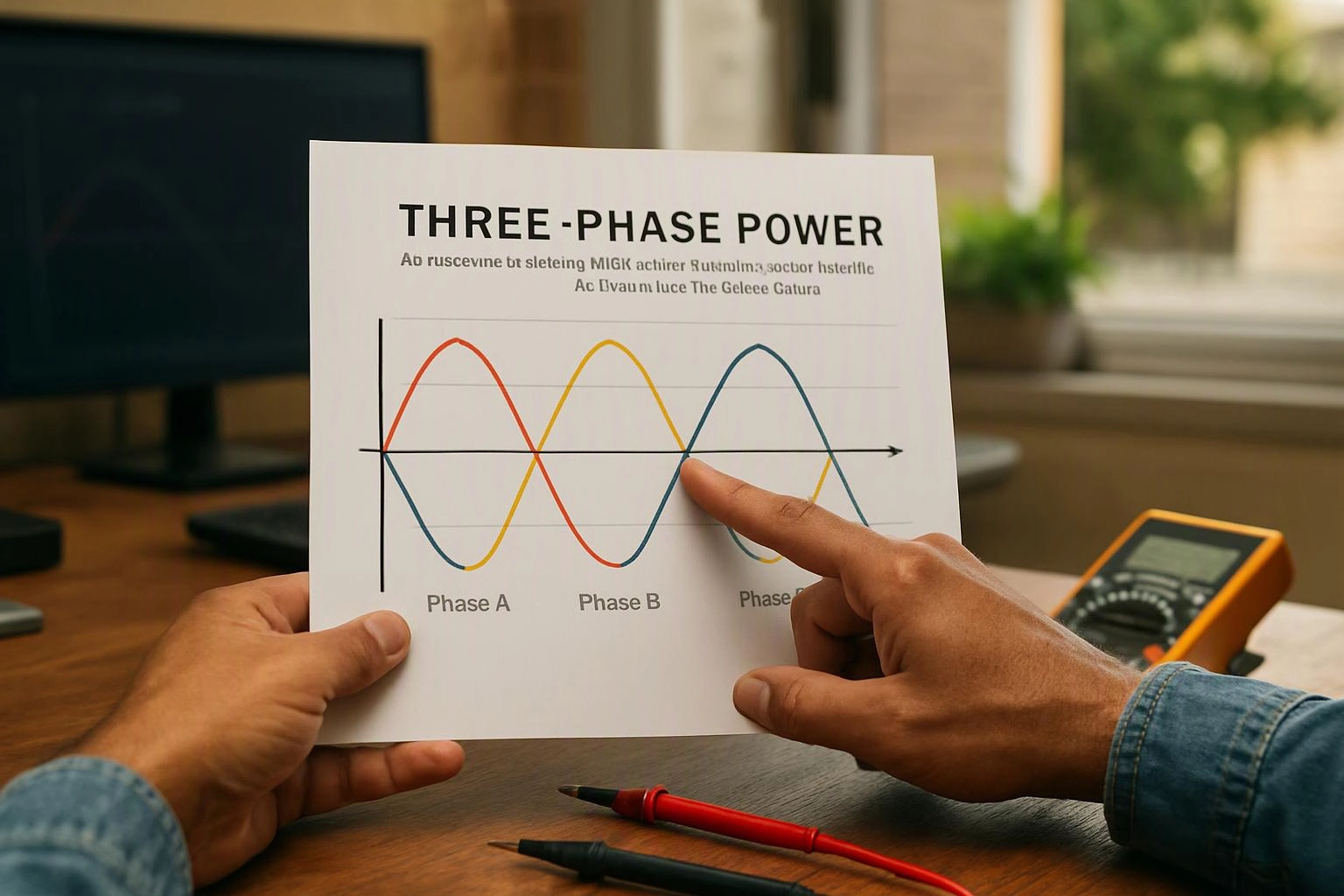
Three-Phase Power moves electrical energy through three coordinated alternating phases. Each phase reaches its peak at a different point in the cycle, so the combined output remains steady as connected equipment operates. This arrangement supports motors because the changing phases create a rotating magnetic field inside the motor.
Related glossary terms: Single-Phase Power, Electrical Load, Line Voltage.
Commercial electrical systems distribute the phases through panel equipment, feeders, disconnects, and branch circuits. A properly designed system assigns loads across the available phases to support balanced operation. Electrical Load describes the demand placed on the system, while Single-Phase Power serves many smaller appliances and general-purpose circuits. Equipment nameplates and electrical plans identify the required voltage and phase arrangement.
From the Center Electric Service team
When we work on commercial electrical installation, we review equipment nameplates and electrical plans before connecting three-phase equipment. We check phase identification, feeder sizing, disconnect placement, and load distribution so the installed wiring matches the equipment requirements and the building’s electrical design.
Three-Phase Power in Practice: A Real-World Example
A commercial kitchen may use three-phase power for a large motor-driven appliance. The installation connects the equipment to a dedicated circuit with the phase arrangement specified by the manufacturer.
Related Terms
Single-Phase Power
Single-Phase Power is an electrical supply method that delivers alternating current through a single voltage waveform…
Electrical Load
Electrical Load is the amount of power that connected devices and equipment draw from an electrical…
Line Voltage
Line Voltage is the electrical potential supplied by a power source to a circuit or device…
Disconnect Switch
Disconnect Switch is a manually operated device that separates electrical equipment from its power supply. The…
Center Electric Service
Have Questions About Three-Phase Power?
Contact Center Electric Service for practical guidance on Three-Phase Power and related electrical services work in Riverside.