
What Is Knob-and-Tube Wiring?
Knob-and-tube wiring is an older electrical wiring method that routes separate insulated conductors through walls, ceilings, and open spaces. Ceramic knobs support the wires, while ceramic tubes protect wires where they pass through wood. The method has no shared protective grounding conductor, which distinguishes it from many modern residential wiring systems.
Quick Facts About Knob-and-tube wiring
Category
Historical residential wiring method
Used for
Power and lighting circuits in older homes
Common confusion
Cloth-covered cable is not always knob-and-tube wiring
Also called
Knob and tube, K&T wiring
Often discussed with
Whole House Rewiring, Electrical Safety Inspection
Key Takeaways About Knob-and-tube wiring
- Ceramic knobs support wires, and ceramic tubes protect wall penetrations.
- Separate conductors travel through open spaces without a shared grounding conductor.
- Knob-and-tube wiring is not the same as cloth-covered cable.
How Knob-and-tube wiring Works
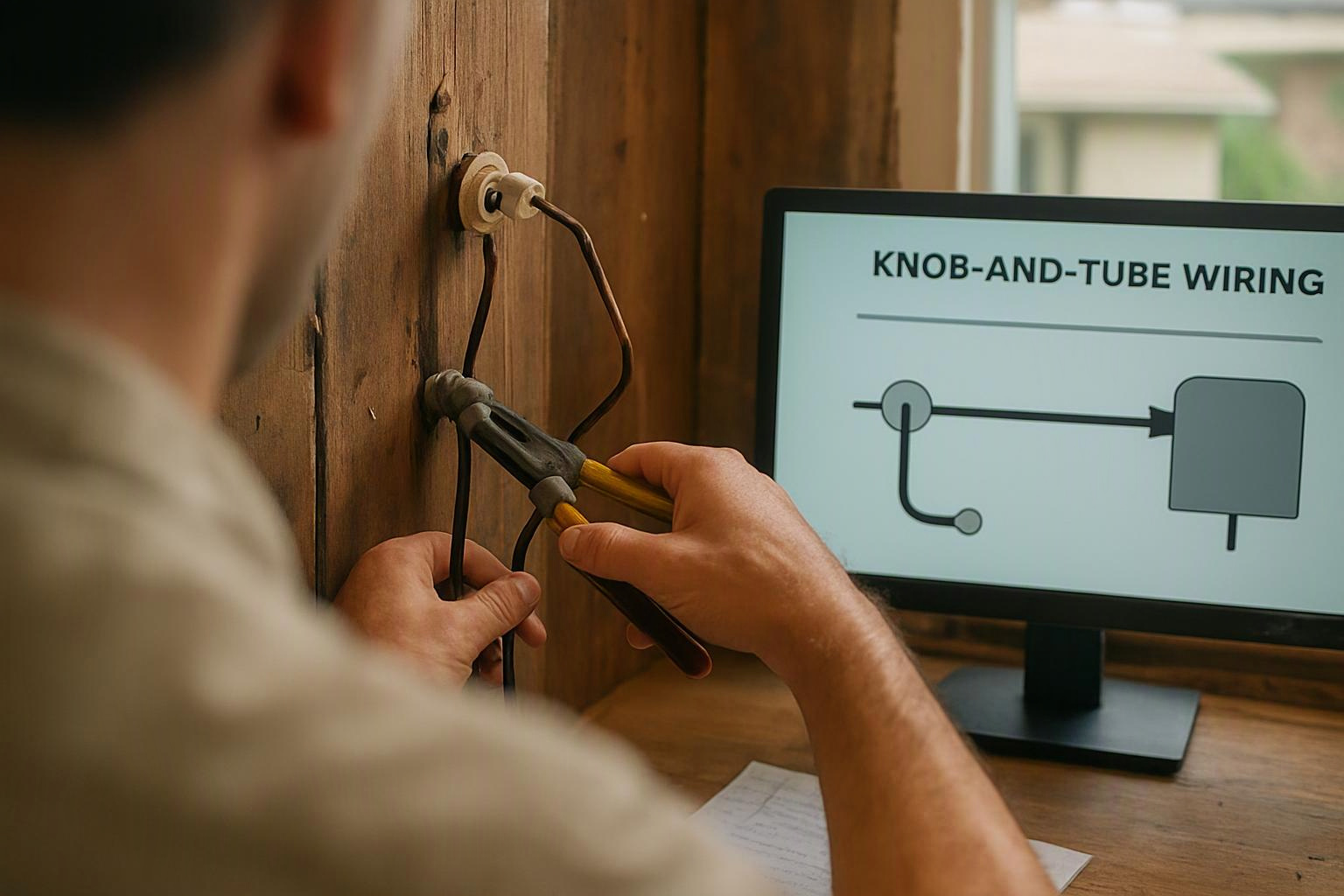
Knob-and-tube wiring routes hot and neutral conductors separately through building spaces. Ceramic knobs hold the conductors away from framing, while ceramic tubes protect insulation where a wire passes through wood. The wiring remains open to surrounding air, which was part of the original design.
Related glossary terms: Romex, Grounding electrode, Wire gauge.
Electrical devices connect to the separate conductors through splices and branch connections. Unlike newer cable systems, this method does not include a shared grounding conductor. Changes to insulation, added circuits, moisture exposure, or crowded connections can affect how an existing system performs, so an inspection considers the visible wiring and its connections together.
From the Center Electric Service team
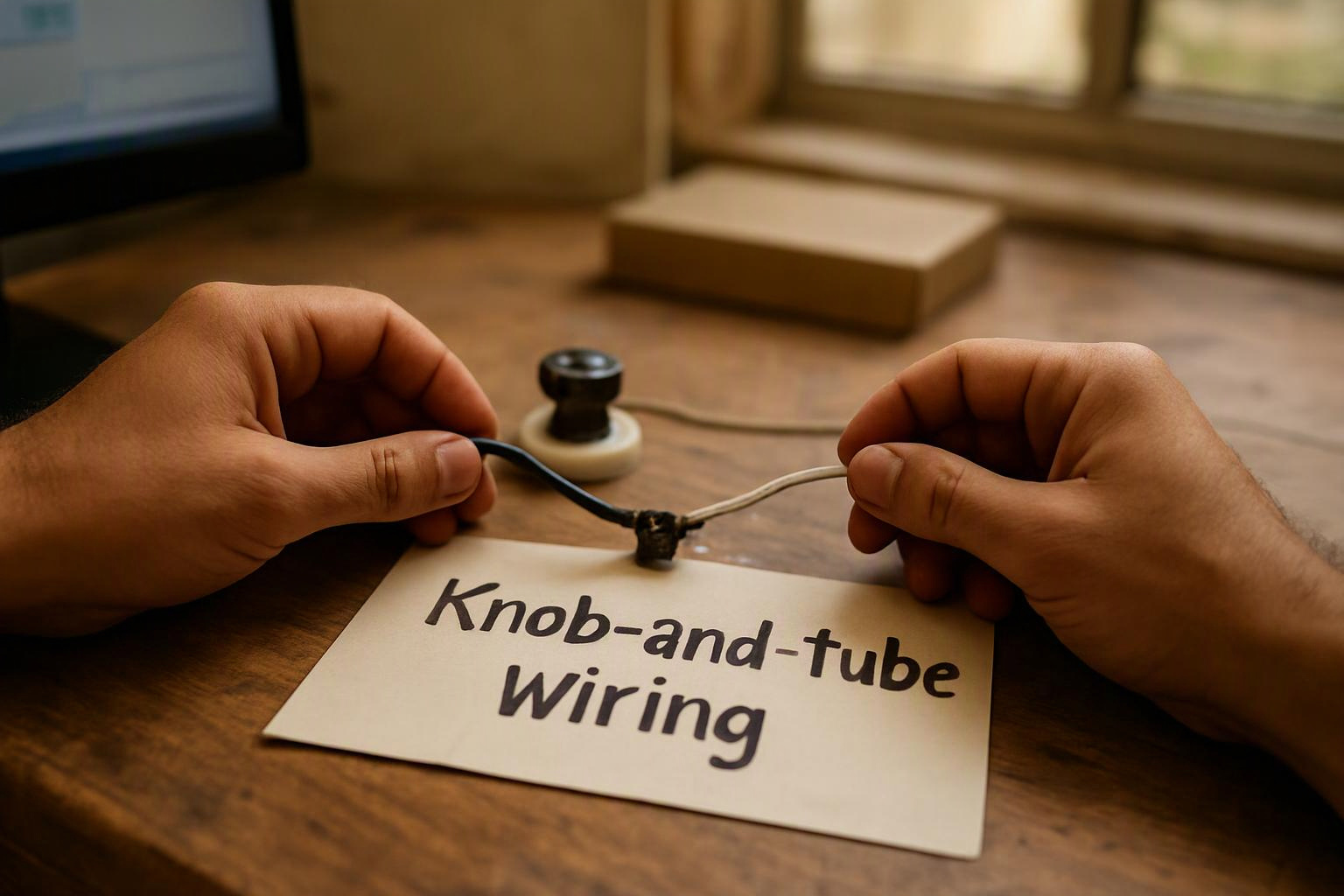
When we inspect knob-and-tube wiring, we trace accessible conductors, examine ceramic supports, and check visible splices for condition. During Whole House Rewiring work, we document how existing circuits are arranged before planning replacement wiring and related grounding work.
Knob-and-tube wiring in Practice: A Real-World Example
A Riverside homeowner may find ceramic knobs in an attic and insulated wires passing through wooden framing. During a Whole House Rewiring project, the wiring plan accounts for those paths before new circuits are installed.
Related Services
Related Terms
Romex
Romex is a common trade name for nonmetallic-sheathed cable used in residential electrical wiring. The cable…
Grounding electrode
A grounding electrode is a conductive object that connects an electrical system to the earth. Common…
Wire gauge
Wire gauge is a sizing system that describes the diameter and current-carrying capacity of an electrical…
Junction box
A Junction box is an enclosed electrical container that protects wire connections and splices. Conductors enter…
Center Electric Service
Have Questions About Knob-and-tube wiring?
Contact Center Electric Service for practical guidance on Knob-and-tube wiring and related 24 hour electrician work in Riverside.