
What Is Line Voltage?
Line Voltage is the electrical potential supplied by a power source to a circuit or device. It describes the voltage present on energized conductors before equipment uses that power. Electricians compare line voltage with equipment ratings to identify compatible connections, trace faults, and assess whether a circuit receives the expected supply.
Quick Facts About Line Voltage
Category
Electrical measurement
Used for
Circuit and equipment troubleshooting
Common confusion
Confused with control or signal voltage
Also called
Mains voltage, Supply voltage
Often discussed with
Electrical Troubleshooting
Key Takeaways About Line Voltage
- Line voltage comes from the electrical supply.
- Equipment ratings must match the available line voltage.
- Line voltage is not the same as low-voltage control power.
How Line Voltage Works
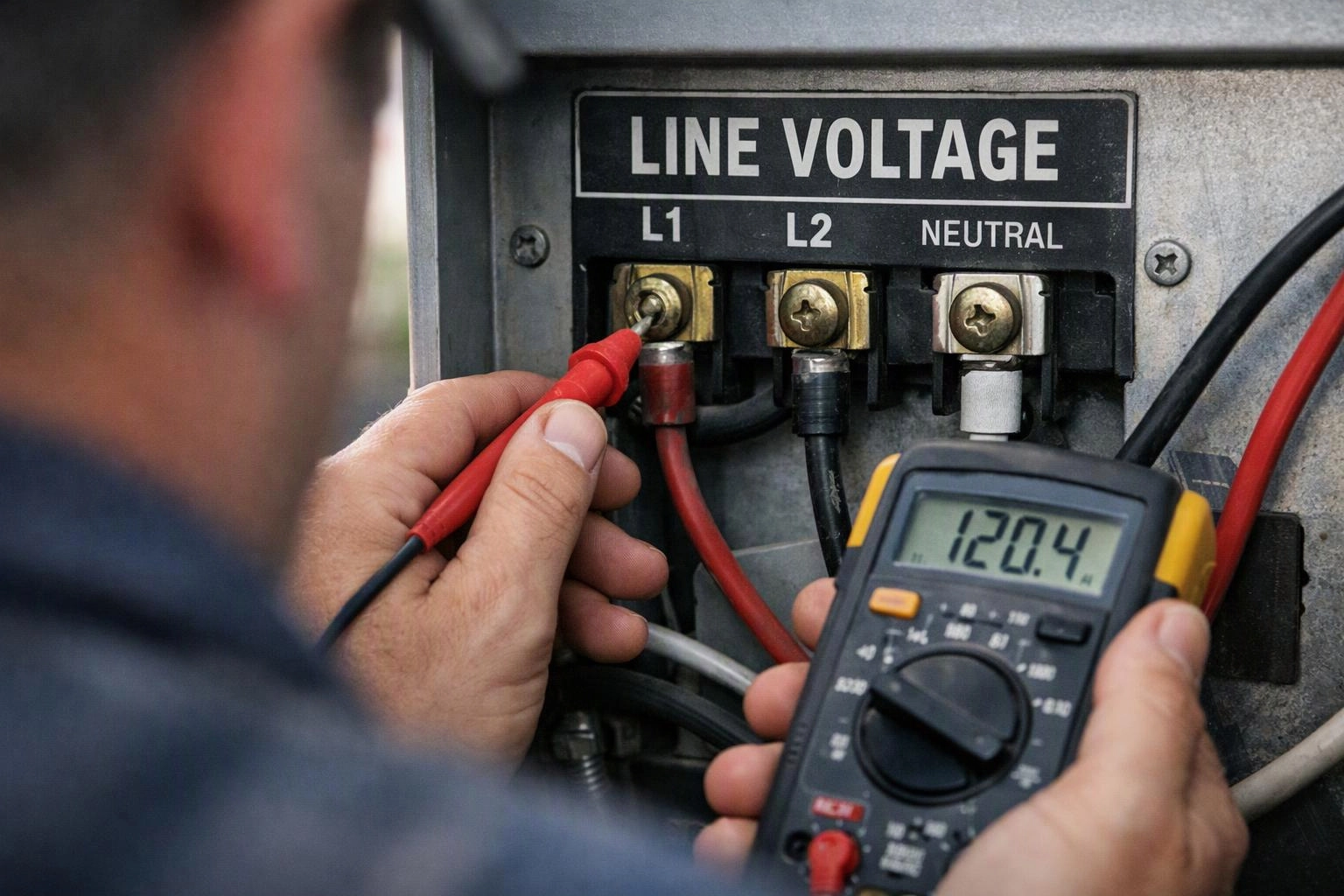
Line Voltage is the supply potential carried by energized conductors to operate connected equipment. A meter measures the potential between selected conductors or between a conductor and a grounded reference. The reading helps show whether power reaches a circuit and whether the circuit has an abnormal condition.
Related glossary terms: Electrical Load, Electrical Meter, Multimeter.
Equipment connects to line voltage through components such as breakers, switches, receptacles, and terminals. Electrical Load uses that supplied energy to operate lights, motors, heating elements, or electronics. Voltage Drop can reduce the potential available at equipment when wiring, connections, or circuit conditions limit delivery. Troubleshooting compares readings at different points to locate where the supply changes.
From the Center Electric Service team
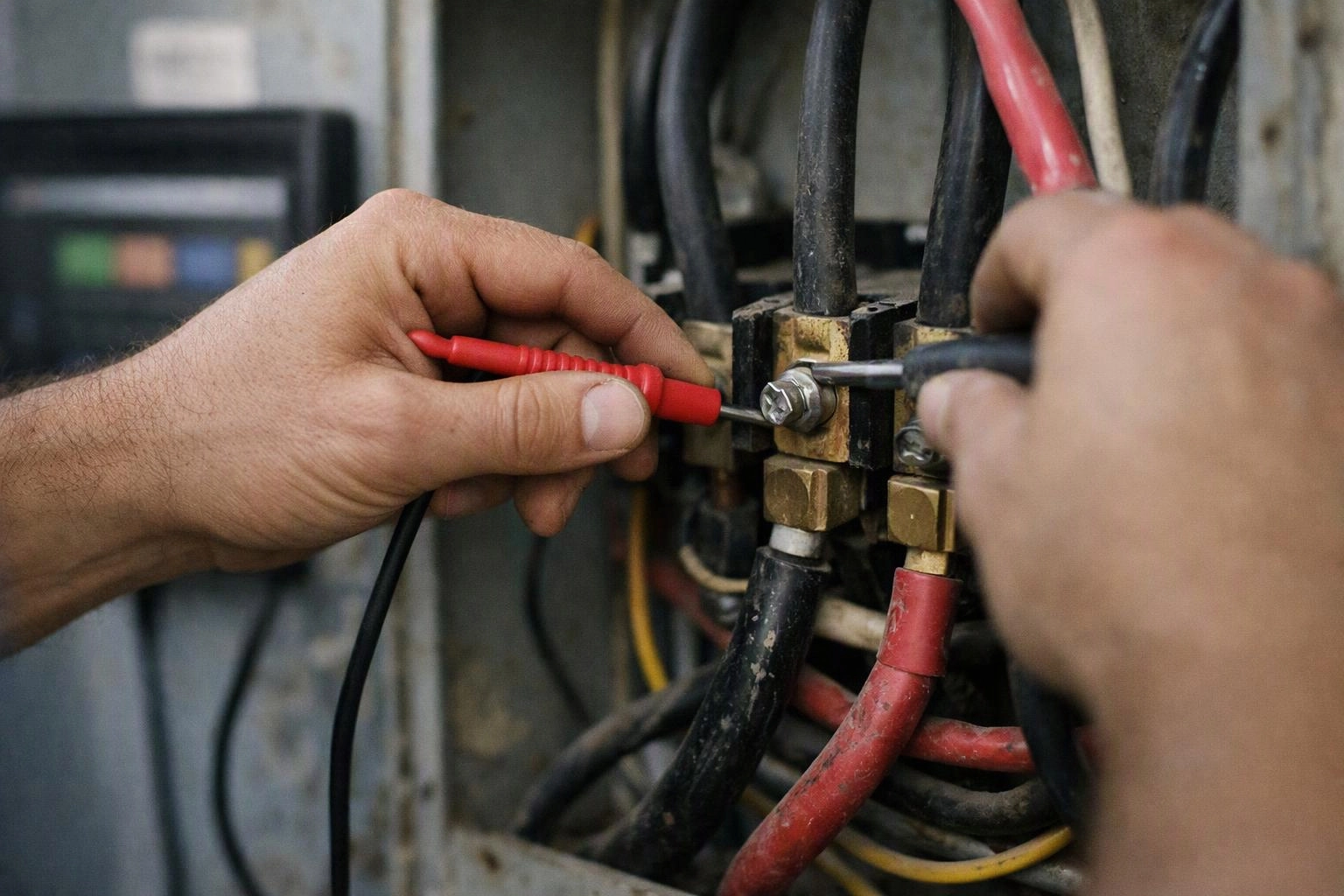
When we troubleshoot a circuit, we check line voltage at carefully selected points and compare the readings with the equipment requirements. Our team also checks connections, breakers, neutrals, and grounding paths when the supply reading does not explain the reported problem. These checks help separate a supply issue from an equipment fault.
Line Voltage in Practice: A Real-World Example
During electrical troubleshooting, a receptacle may appear intact while a connected appliance does not operate. A technician checks line voltage at the receptacle and at upstream connection points to determine whether the supply reaches the device.
Related Services
Related Terms
Electrical Load
Electrical Load is the amount of power that connected devices and equipment draw from an electrical…
Electrical Meter
An electrical meter is a device that measures the electricity entering a building from the utility…
Multimeter
A multimeter is a handheld electrical test instrument that measures voltage, current, and resistance. Many models…
Voltage Drop
Voltage Drop is the reduction in electrical pressure that occurs as current travels through a conductor…
Center Electric Service
Have Questions About Line Voltage?
Contact Center Electric Service for practical guidance on Line Voltage and related electrical services work in Riverside.