
What Is a Multimeter?
A multimeter is a handheld electrical test instrument that measures voltage, current, and resistance. Many models also check continuity and other circuit conditions. Electricians use a multimeter to observe electrical values at conductors, terminals, outlets, switches, and equipment. The readings help identify open circuits, unwanted resistance, missing voltage, or energized components.
Quick Facts About Multimeter
Category
Electrical testing instrument
Used for
Checking circuit values and conditions
Common confusion
Confused with a utility electrical meter
Also called
Volt-ohm meter, VOM
Often discussed with
Electrical Troubleshooting
Key Takeaways About Multimeter
- One tool can measure several electrical properties.
- Readings help locate faults within energized or de-energized circuits.
- A multimeter is not the same as an electrical meter.
How Multimeter Works
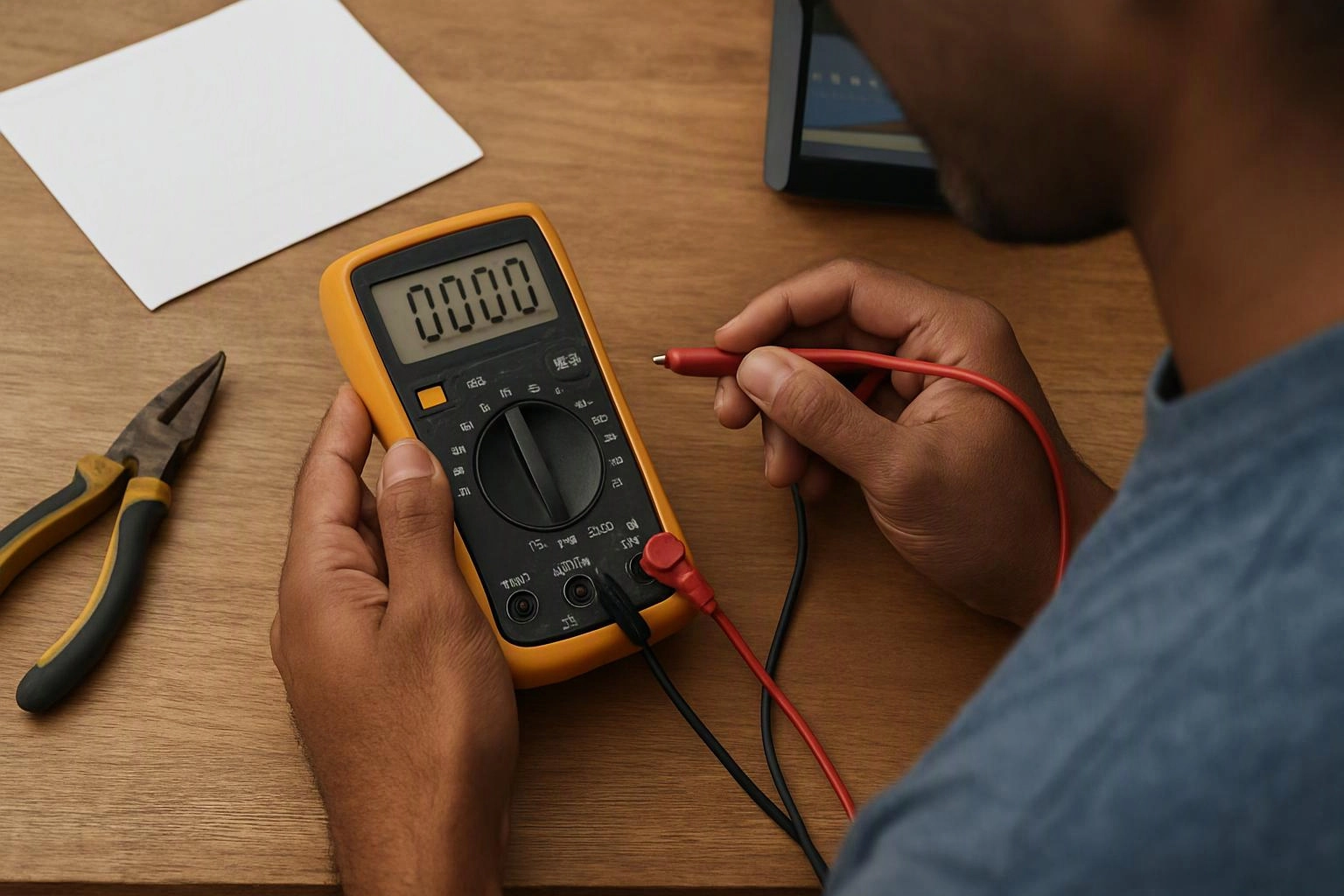
A multimeter measures an electrical property through test leads connected to selected points in a circuit. The meter compares the electrical condition at those points and displays a reading on its screen. The selected function and range must match the property being checked.
Related glossary terms: Continuity Test, Electrical Meter, Line Voltage.
Voltage testing compares potential between two points. Resistance testing sends a small test signal through a de-energized path. Continuity testing looks for a low-resistance connection and commonly supports checks of wires, fuses, and switches. Current testing measures flow through the circuit, so the meter must be connected in the correct path.
Electricians interpret the reading alongside the circuit layout and the reported symptom. A voltage reading at an outlet, for example, does not by itself prove that every connection in the circuit is sound.
From the Center Electric Service team
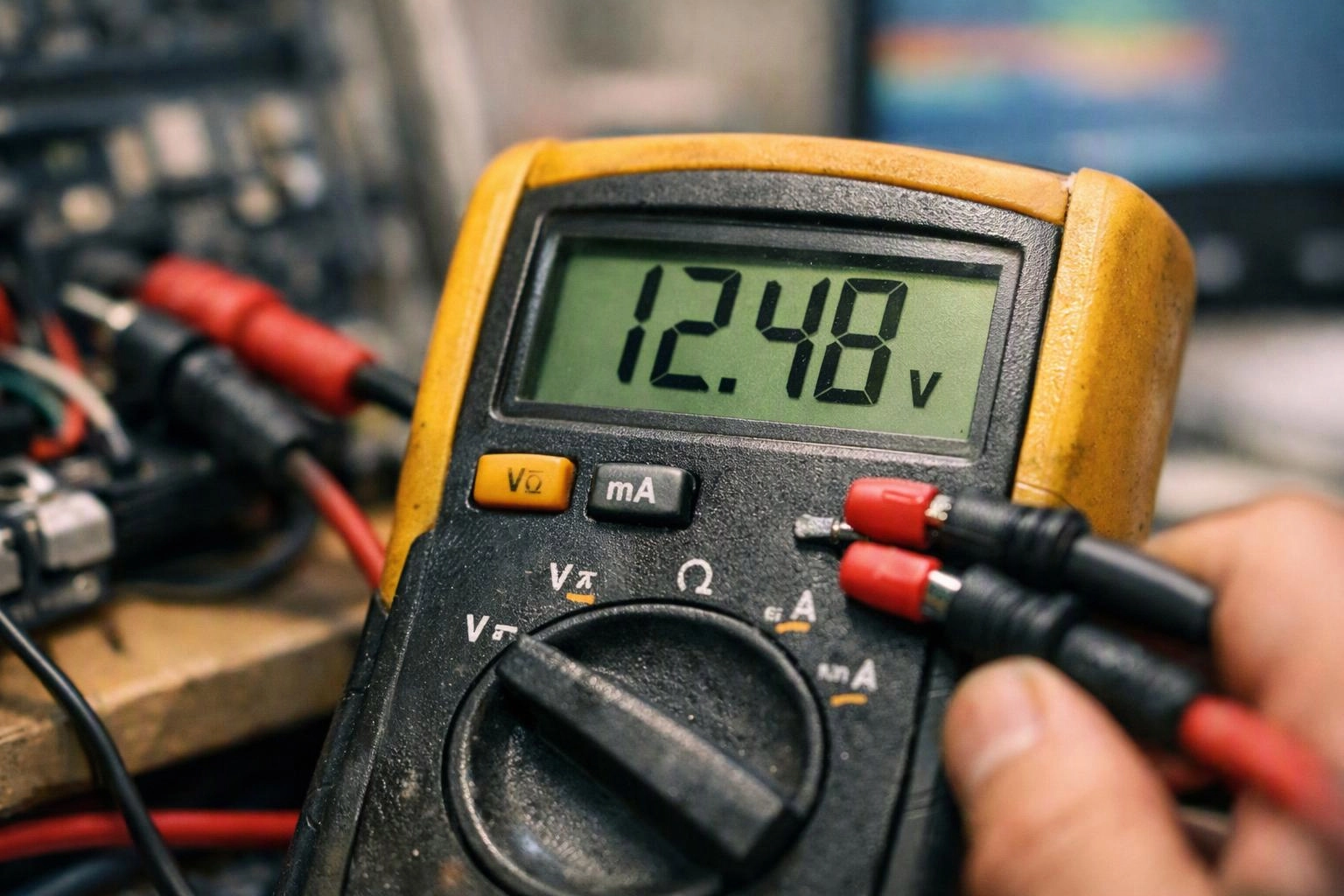
When we troubleshoot, we select the measurement that matches the suspected fault and compare readings at relevant circuit points. We also check whether the meter setting, test lead placement, and circuit condition support a reliable result before drawing conclusions.
Multimeter in Practice: A Real-World Example
A receptacle loses power intermittently, so we use a multimeter to check voltage at the receptacle and nearby connections. Comparing those readings helps show whether the issue is at the receptacle, a connection, or another point in the circuit.
Related Services
Related Terms
Continuity Test
A Continuity Test is an electrical check that determines whether a complete, low-resistance path exists between…
Electrical Meter
An electrical meter is a device that measures the electricity entering a building from the utility…
Line Voltage
Line Voltage is the electrical potential supplied by a power source to a circuit or device…
Voltage Drop
Voltage Drop is the reduction in electrical pressure that occurs as current travels through a conductor…
Center Electric Service
Have Questions About Multimeter?
Contact Center Electric Service for practical guidance on Multimeter and related electrical services work in Riverside.