
What Is Voltage Drop?
Voltage Drop is the reduction in electrical pressure that occurs as current travels through a conductor, connection, or circuit component. The reduction results from the resistance of the path. Excessive voltage drop can cause lights to dim, motors to perform poorly, or equipment to operate unreliably even when the source voltage appears normal.
Quick Facts About Voltage Drop
Category
Electrical measurement
Used for
Circuit troubleshooting
Common confusion
Not the same as a short circuit
Typical tool
Multimeter
Also called
Voltage loss
Often discussed with
Electrical Troubleshooting
Key Takeaways About Voltage Drop
- Resistance in the circuit path creates voltage drop.
- Longer conductors and higher loads increase the effect.
- Voltage drop is not the same as a short circuit.
How Voltage Drop Works
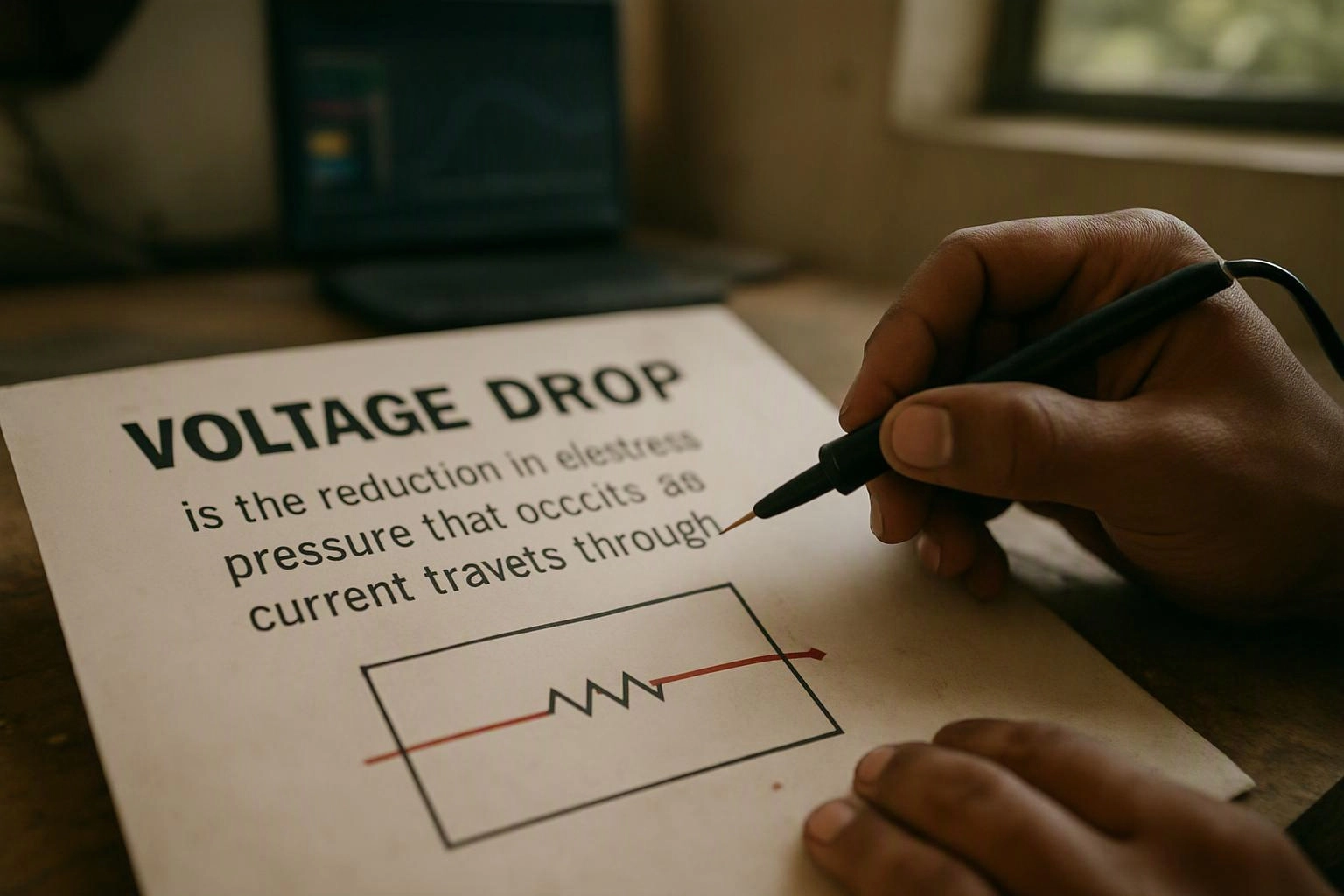
Voltage Drop occurs as electrical current meets resistance along its route from the source to the load. Conductors, terminals, splices, switches, and other connections all contribute resistance. A longer wire run, an undersized conductor, a loose connection, or a heavily loaded circuit can increase the loss.
Related glossary terms: Electrical Load, Electrical Meter, Line Voltage.
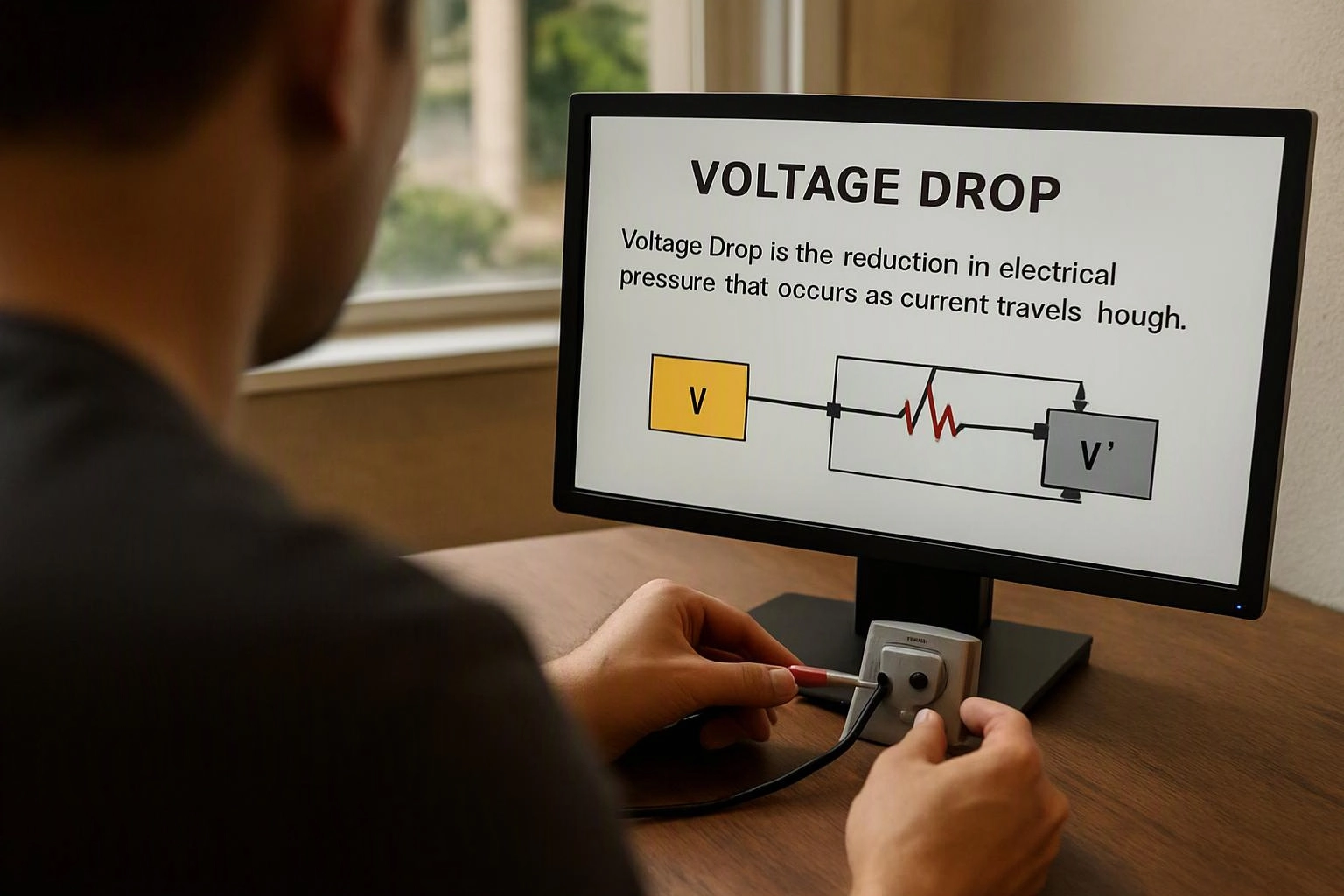
An electrician checks voltage at the source and then checks voltage at the equipment while the circuit is operating. The difference between those readings shows the drop across the circuit path. A multimeter can help locate the section causing the loss. Testing individual connections can narrow the fault to a terminal, splice, conductor, or device.
Line Voltage describes the electrical pressure supplied to a circuit, while voltage drop describes pressure lost along the path. A Load Center may show normal source voltage even when a distant receptacle receives less voltage under load.
From the Center Electric Service team
When we troubleshoot a suspected voltage drop, we measure the circuit at the source and at the operating equipment. We compare readings under load, inspect accessible connections, and trace the loss through the circuit path. Our team also checks whether the conductor size and circuit demand suit the equipment.
Voltage Drop in Practice: A Real-World Example
A homeowner notices that a garage light dims when a motor starts. During electrical troubleshooting, the source reading remains steady while the light circuit shows a noticeable loss at the operating load. Testing along the circuit can identify a weak connection or conductor problem.
Related Services
Related Terms
Electrical Load
Electrical Load is the amount of power that connected devices and equipment draw from an electrical…
Electrical Meter
An electrical meter is a device that measures the electricity entering a building from the utility…
Line Voltage
Line Voltage is the electrical potential supplied by a power source to a circuit or device…
Multimeter
A multimeter is a handheld electrical test instrument that measures voltage, current, and resistance. Many models…
Center Electric Service
Have Questions About Voltage Drop?
Contact Center Electric Service for practical guidance on Voltage Drop and related electrical services work in Riverside.