
What Is Overcurrent?
Overcurrent is an electrical condition in which current exceeds the level a circuit, conductor, or device is designed to carry. The excess may result from an overload, a short circuit, or another fault. Protective devices detect the condition and interrupt power to limit heat, equipment damage, and wiring hazards.
Quick Facts About Overcurrent
Category
Electrical fault condition
Used for
Circuit protection and code correction
Common confusion
Different from overvoltage
Also called
Overcurrent condition, Excess current
Often discussed with
Electrical Code Correction, Circuit Breaker Repair
Key Takeaways About Overcurrent
- Overcurrent involves current above a circuit’s intended capacity.
- Overloads and short circuits are common causes.
- Overcurrent is not the same as high voltage.
How Overcurrent Works
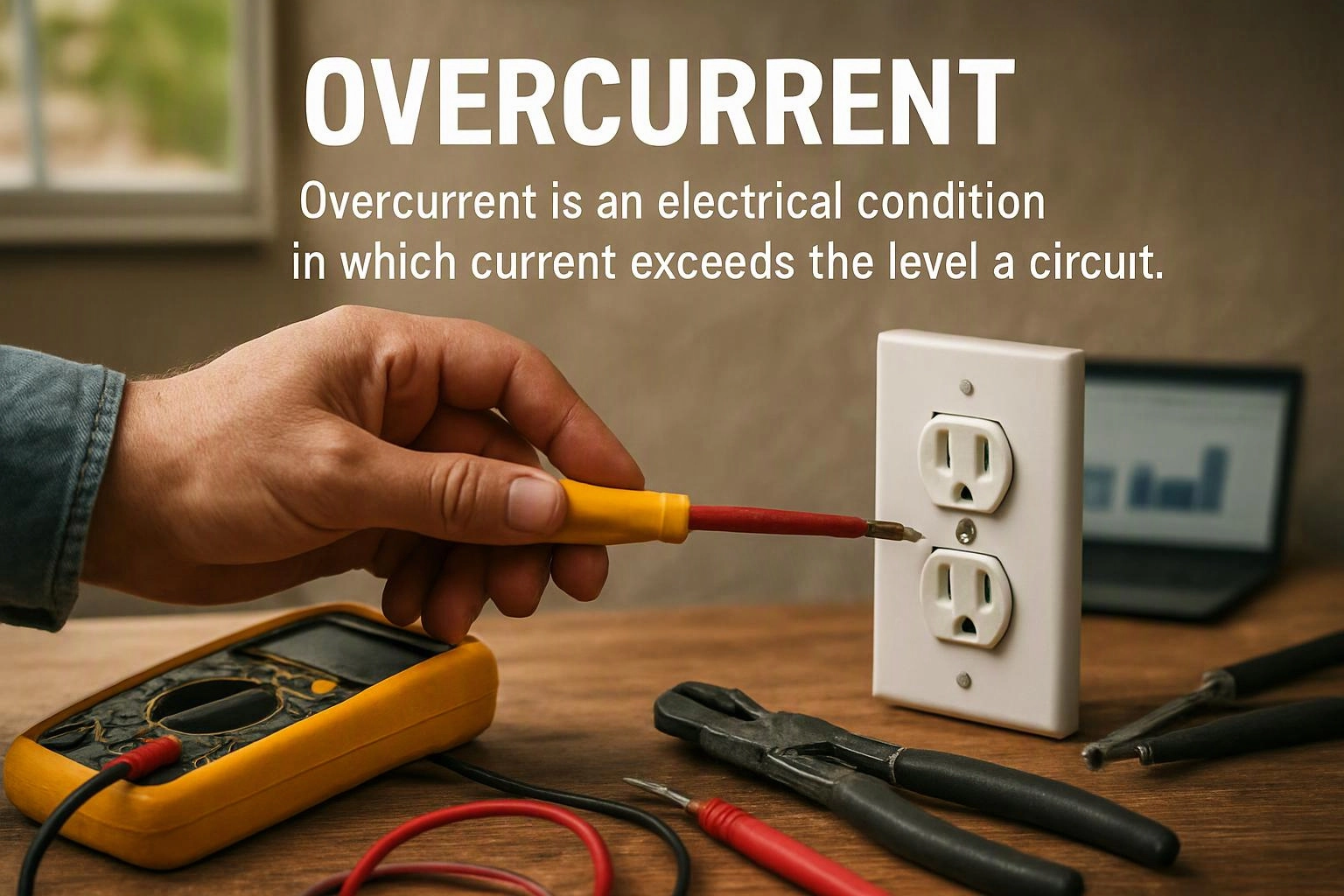
Overcurrent occurs when electrical flow rises beyond the capacity of a circuit or connected equipment. An overload develops when connected loads draw more current than the circuit can carry during normal operation. A short circuit creates a fault path with very low resistance, which can produce a rapid rise in current.
Related glossary terms: Ampacity, Branch Circuit, Circuit Tracer.
A circuit breaker or fuse responds to excessive current by opening the circuit. The protective device must match the conductor size, equipment rating, and circuit design. During an electrical code correction, the source of the excess current matters because replacing a protective device alone may leave an overloaded circuit or damaged wiring unresolved. An overload can be recurring, while a short circuit usually points to a fault that requires testing.
From the Center Electric Service team
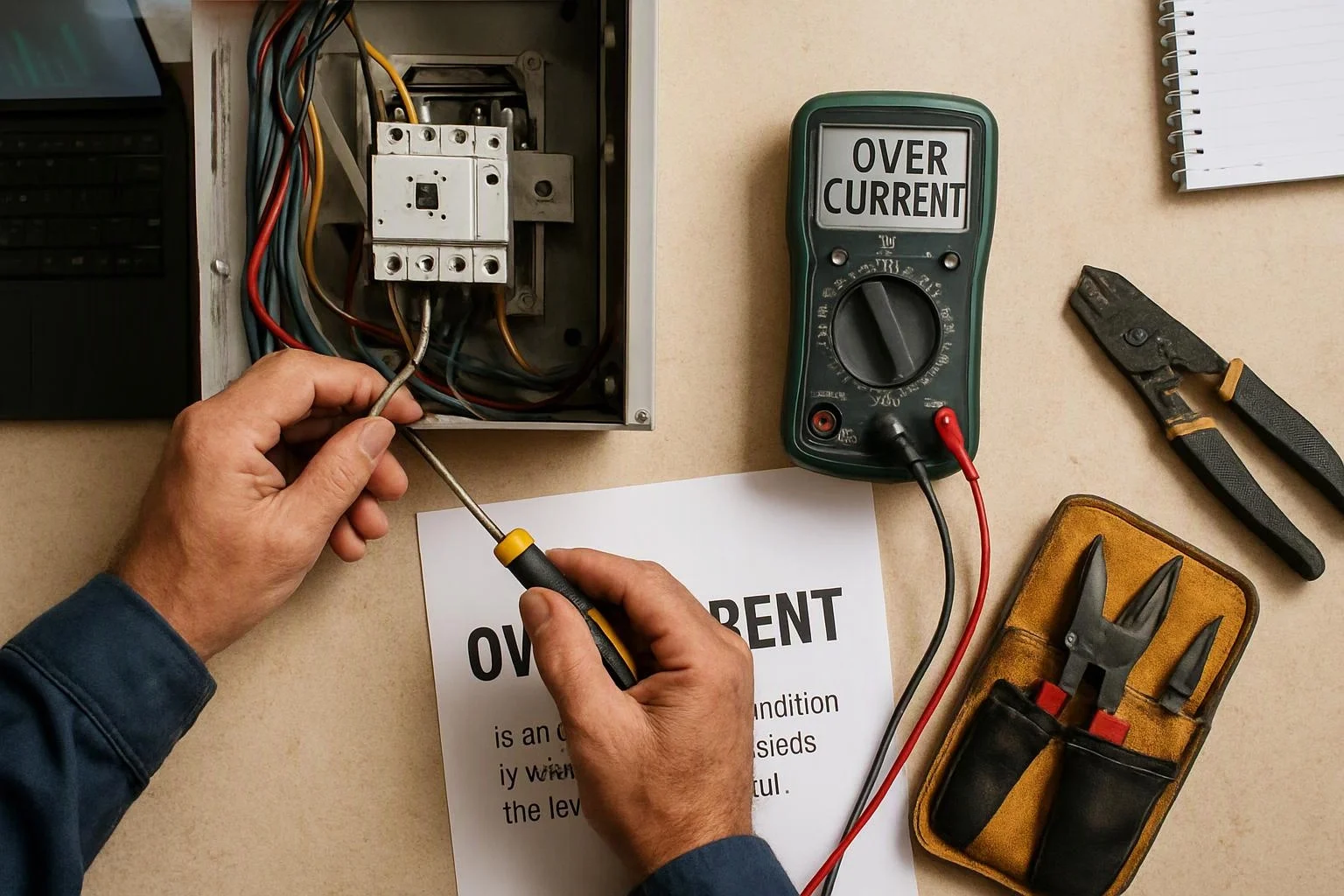
When we inspect overcurrent concerns, we trace the circuit, examine conductor condition, and check the protective device against the installation. We also look for overloaded equipment, loose connections, and fault paths. Our team records the correction needed so the repair addresses the underlying condition, not only the tripped breaker.
Overcurrent in Practice: A Real-World Example
A kitchen branch circuit trips when several appliances operate together, indicating that the connected load may exceed the circuit’s design. An electrician checks the circuit, wiring, connections, and breaker before recommending an electrical code correction.
Related Services
Related Terms
Ampacity
Ampacity is the maximum electrical current a conductor can carry safely under stated conditions. The rating…
Branch Circuit
Branch Circuit is a wiring path that carries electricity from a panelboard overcurrent device to connected…
Circuit Tracer
A Circuit Tracer is an electrical testing tool that identifies which circuit supplies a particular outlet…
Electrical Load
Electrical load is the amount of power that connected devices and equipment draw from a circuit…
Center Electric Service
Have Questions About Overcurrent?
Contact Center Electric Service for practical guidance on Overcurrent and related 24 hour electrician work in Riverside.