
What Is Polarity?
Polarity is the correct relationship between energized, neutral, and grounding conductors in an electrical circuit. It shows which conductor carries supply voltage and which provides the intended return path. Correct polarity helps outlets, switches, fixtures, and appliances operate as designed. Reversed polarity can leave parts energized when controls appear switched off.
Quick Facts About Polarity
Category
Electrical wiring condition
Used for
Checking conductor connections
Common confusion
Polarity is different from grounding
Also called
Electrical polarity, Reversed polarity
Often discussed with
Electrical Safety Inspection, Electrical Troubleshooting
Key Takeaways About Polarity
- Polarity assigns distinct roles to circuit conductors.
- Outlet testers can help identify reversed connections.
- Polarity is not the same as grounding.
How Polarity Works
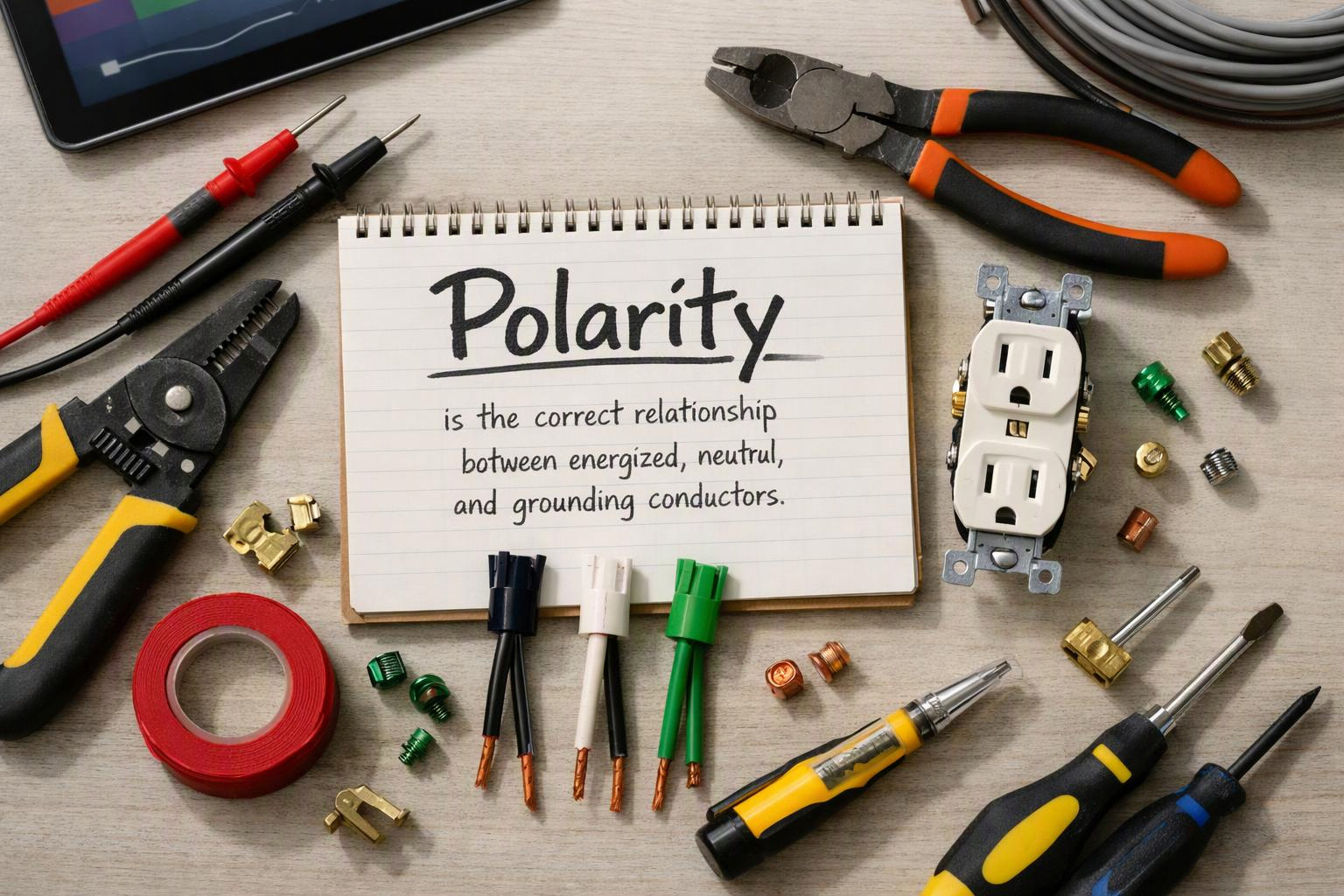
Polarity gives each conductor a defined role within a circuit. The energized conductor supplies voltage, while the neutral conductor provides the intended return path. A grounding conductor supports fault protection and does not replace the neutral conductor. Switches and receptacles must connect to the correct conductors for their controls and contact points to work as intended.
Related glossary terms: Neutral wire, Open neutral, Grounding electrode.
An electrician checks polarity by identifying conductor connections and testing how voltage appears at a receptacle or device. A receptacle tester can indicate a reversed hot and neutral connection, while direct testing may be needed for unusual wiring or suspected faults. Reversed polarity may allow a device to operate while leaving internal parts energized after a switch opens. Grounding addresses fault-current paths, so a grounded system can still have incorrect polarity.
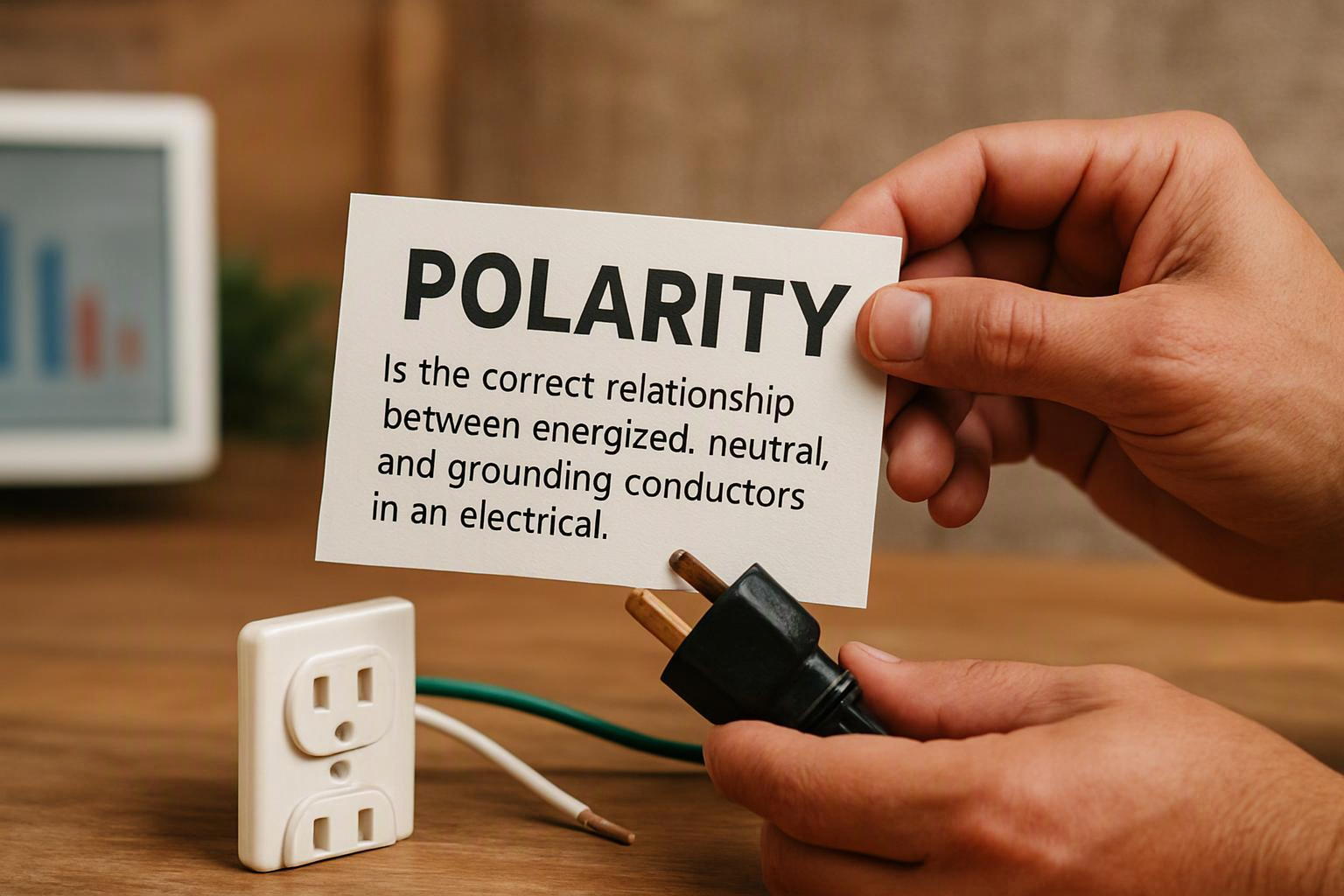
From the Center Electric Service team
When we inspect polarity, we identify the conductors at the device and test the connection under normal circuit conditions. We also check whether switches control the intended energized conductor and look for signs of reversed connections. Our team records polarity concerns as part of an Electrical Safety Inspection.
Polarity in Practice: A Real-World Example
During an Electrical Safety Inspection, a receptacle may power a lamp normally while testing shows reversed polarity. The wiring may need correction so the switch and energized conductor serve their intended roles.
Related Terms
Neutral wire
A neutral wire is a current-carrying conductor that completes the electrical path from a load back…
Open neutral
An open neutral is a break or failed connection in the neutral conductor of an electrical…
Grounding electrode
A grounding electrode is a conductive object that connects an electrical system to the earth. Common…
Continuity test
Continuity test is an electrical check that determines whether a conductive path remains unbroken between two…
Center Electric Service
Have Questions About Polarity?
Contact Center Electric Service for practical guidance on Polarity and related 24 hour electrician work in Riverside.