
What Is Single-Phase Power?
Single-Phase Power is an electrical supply method that delivers alternating current through a single voltage waveform for equipment and circuits. The system commonly serves lighting, receptacles, office equipment, and other moderate electrical loads. Its design suits many commercial spaces, but larger motors and high-demand equipment may require three-phase power.
Quick Facts About Single-Phase Power
Category
Electrical power distribution
Used for
Lighting, receptacles, and moderate loads
Common confusion
Often confused with three-phase power
Also called
Single-phase electricity
Often discussed with
Commercial Electrical Installation, Electrical Service Upgrade
Key Takeaways About Single-Phase Power
- One alternating-current waveform distinguishes single-phase power.
- The system commonly serves lighting, receptacles, and office equipment.
- Single-phase power is not the same as three-phase power.
How Single-Phase Power Works
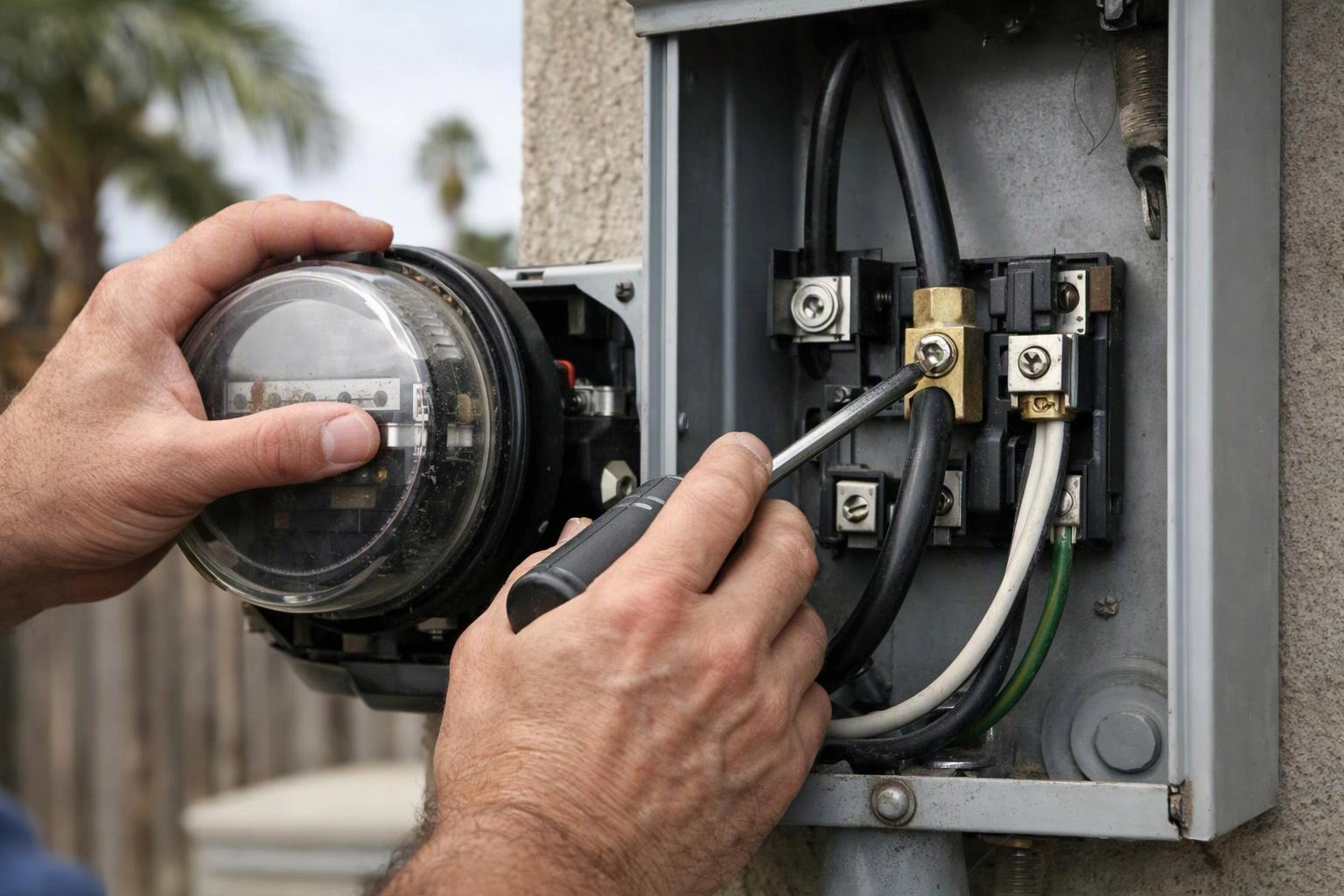
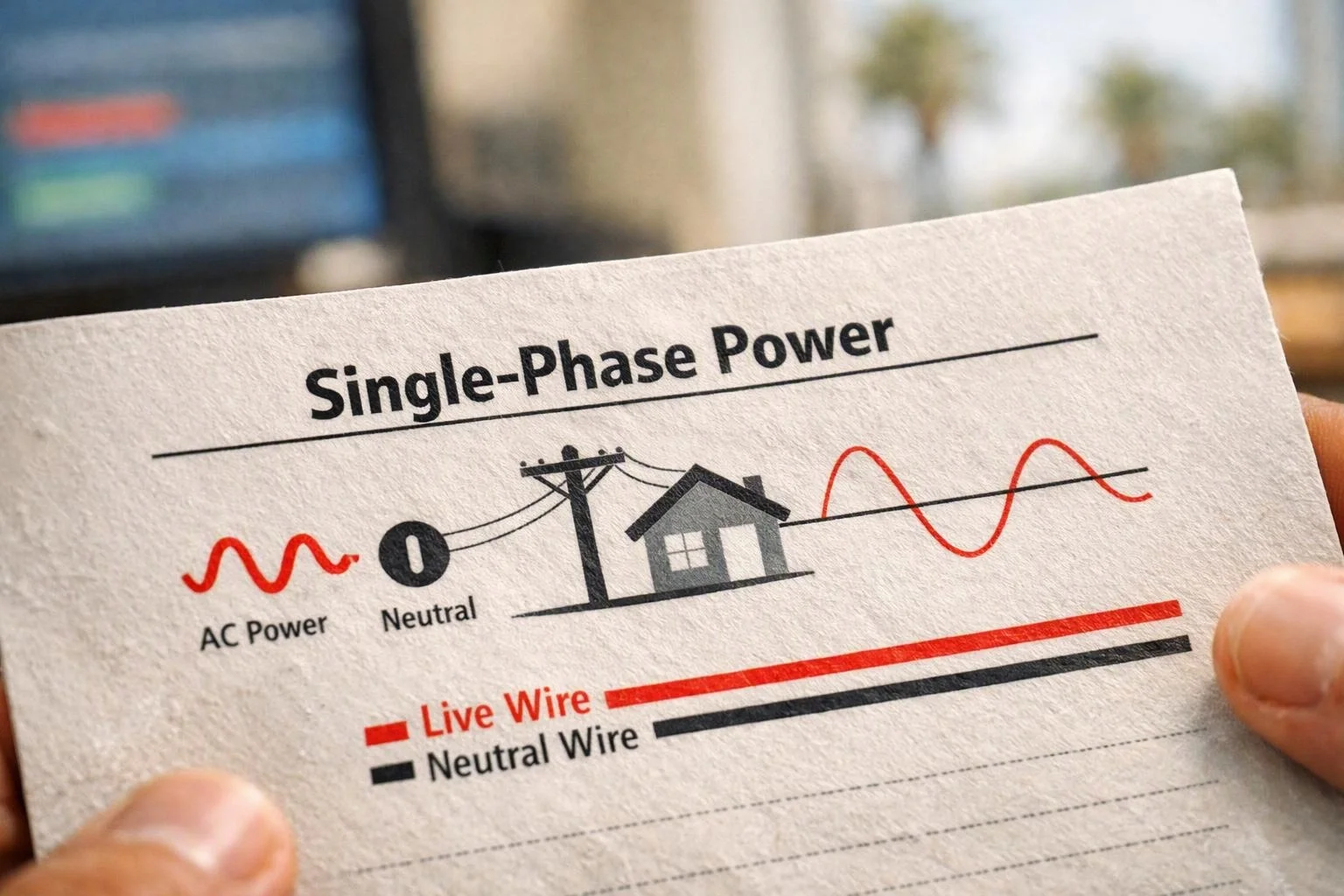
Single-Phase Power carries alternating current through one voltage waveform. The voltage rises and falls in a repeating pattern, which creates the electrical pressure that moves current through a connected circuit. A neutral conductor provides the return path for many circuits, while equipment grounding supports fault protection.
Related glossary terms: Three-Phase Power, Electrical Load, Load Center.
Commercial electrical installation uses single-phase circuits for loads with modest and steady demand. A load center distributes power to branch circuits that serve receptacles, lighting, and small equipment. Larger motors, heating systems, and other demanding equipment may need a different supply arrangement, so the equipment rating and available service must be checked before installation.
From the Center Electric Service team
When we plan a commercial electrical installation, we identify the equipment connected to each single-phase circuit. We check the service, panel capacity, conductors, and overcurrent protection before connecting new loads. Our team also confirms that equipment ratings match the available electrical supply.
Single-Phase Power in Practice: A Real-World Example
A small commercial office may use single-phase power for its lighting, receptacles, computers, and break-room equipment. The installation groups those loads into properly sized branch circuits supplied from the electrical panel.
Related Terms
Three-Phase Power
Three-Phase Power is an electrical distribution method that uses three alternating voltage waves with matched frequency…
Electrical Load
Electrical Load is the amount of power that connected devices and equipment draw from an electrical…
Load Center
A Load Center is an electrical enclosure that receives power from a service entrance and distributes…
Line Voltage
Line Voltage is the electrical potential supplied by a power source to a circuit or device…
Center Electric Service
Have Questions About Single-Phase Power?
Contact Center Electric Service for practical guidance on Single-Phase Power and related electrical services work in Riverside.