
What Is Trenching?
Trenching is the process of creating a narrow excavation for placing underground electrical conductors, conduit, or related infrastructure. The work includes planning the route, opening the ground, preparing the excavation, installing the electrical pathway, and restoring the surface. Trenching connects an electrical system to equipment or structures that cannot be served through exposed wiring.
Quick Facts About Trenching
Category
Underground electrical installation
Used for
Installing underground wiring or conduit
Common confusion
Trenching differs from directional boring
Also called
Utility trenching, Electrical trenching
Often discussed with
Underground Electrical Installation
Key Takeaways About Trenching
- Trenching creates an underground route, not the electrical circuit itself.
- Route planning must account for structures, access, drainage, and surface restoration.
- Trenching is not the same as boring, which passes beneath surfaces with less excavation.
How Trenching Works
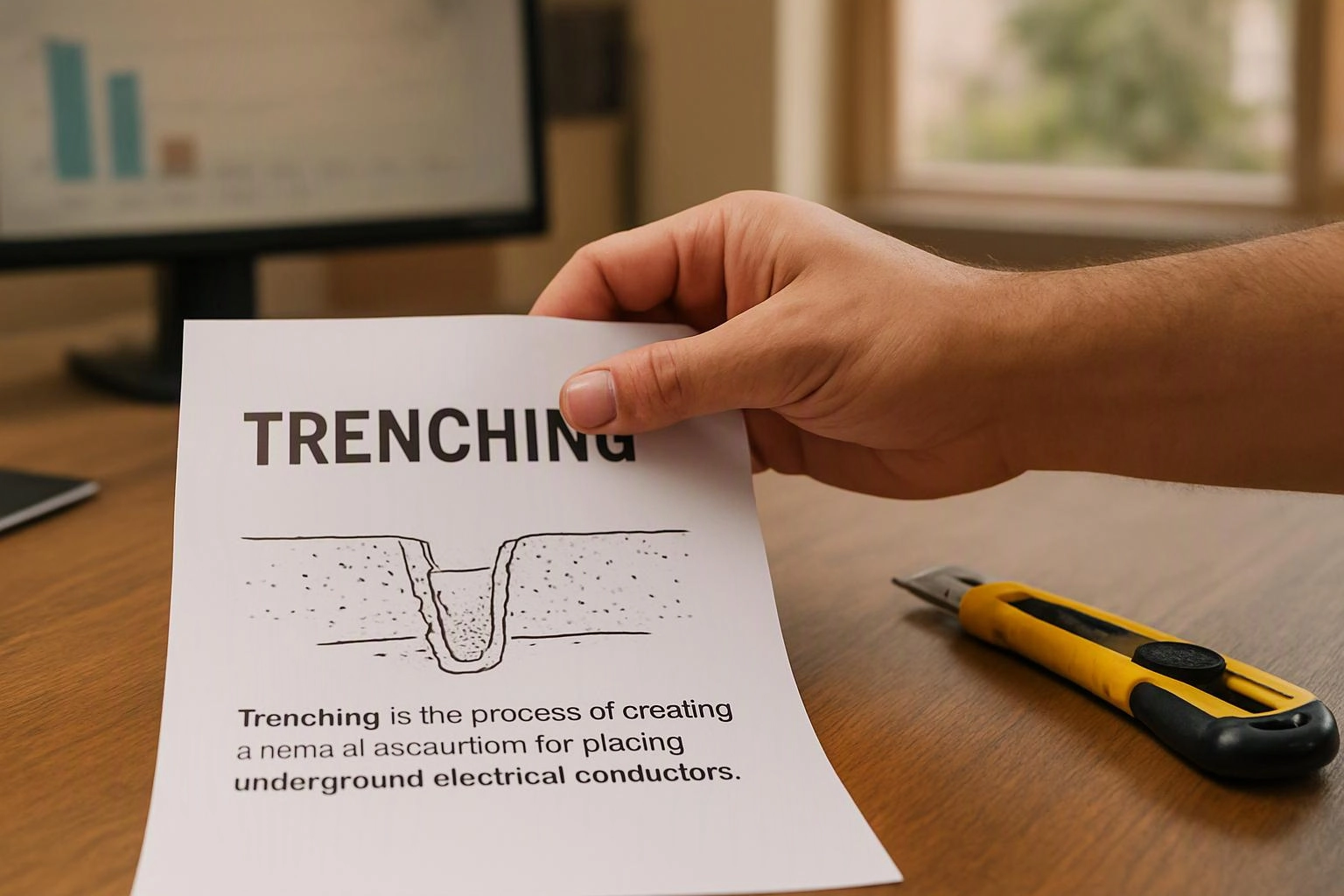
Trenching works by opening a planned path through soil so an underground electrical route can be installed. The route is selected to connect the electrical source with the destination while accounting for structures, access points, landscaping, and surface conditions. The excavation is then prepared for the planned wiring method.
Related glossary terms: Conduit, Direct-Burial Cable, Voltage Drop.
After preparation, workers place conduit or approved direct-burial cable in the route. The installation is checked before the excavation is closed, because buried components become harder to reach after backfilling. The surface is then restored according to the site conditions. Trenching applies to projects such as supplying detached structures, outdoor equipment, lighting, or new electrical service routes.
From the Center Electric Service team
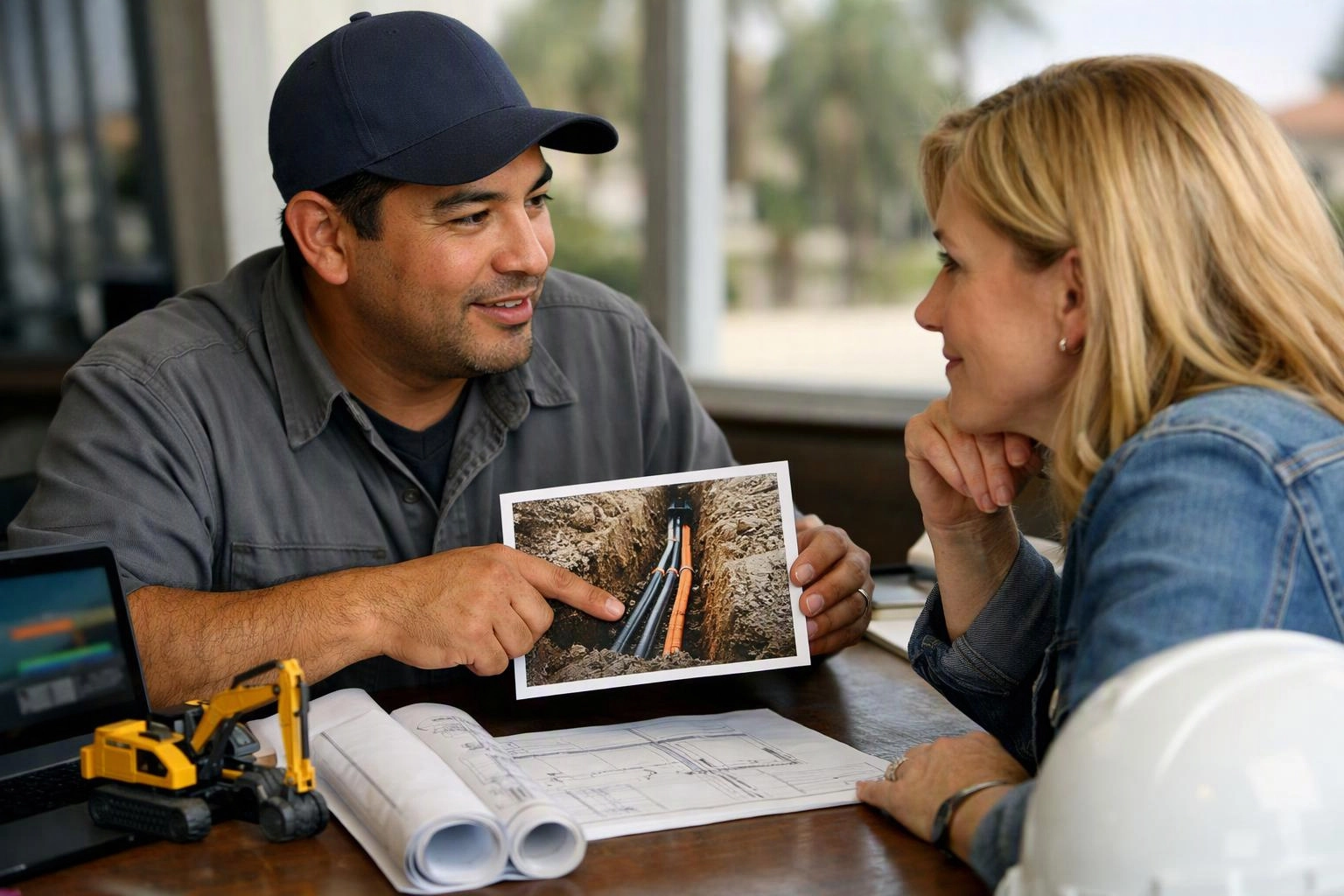
When we plan trenching, we review the route, soil conditions, access, and the location of existing site features. Our team checks the underground electrical pathway before the excavation is closed. We also consider how backfilling and surface restoration will affect the finished installation.
Trenching in Practice: A Real-World Example
A homeowner adding power to a detached workshop may need trenching from the main electrical equipment to the workshop. The route can contain conduit that protects the conductors below the finished ground surface.
Related Services
Related Terms
Conduit
Conduit is a protective raceway that surrounds and guides insulated electrical wires or cables. It may…
Direct-Burial Cable
Direct-Burial Cable is an electrical cable built with insulation and an outer jacket that allow approved…
Voltage Drop
Voltage Drop is the reduction in electrical pressure that occurs as current travels through a conductor…
Center Electric Service
Have Questions About Trenching?
Contact Center Electric Service for practical guidance on Trenching and related electrical services work in Riverside.