EV Charger Installation Mistakes: Wiring, Load, and Equipment Errors to Avoid
EV charger installation mistakes usually involve incorrect wiring, inadequate electrical capacity, poor equipment selection, or missing safety checks; Center Electric Service identifies these risks and installs the appropriate charging, load-management, and backup-power equipment.
Get a Free EstimateWhy EV Charger Installation Mistakes Matter
EV charger installation mistakes matter because incorrect electrical work can damage equipment, disrupt household power, and create serious safety hazards. We check the electric vehicle charger as part of the whole electrical system.
Correct work protects homeowner safety and property. Our team matches the charging equipment, wiring, and protection devices to the home before we energize the system.
How We Check an EV Charger Installation Before Work Begins
Center Electric Service checks the electrical service, available load, circuit path, charger requirements, and installation location before we plan the work. This review helps us identify problems before they become correction costs.
Mistake: Using the Wrong Wire Size or Conductor Type
Incorrect conductor sizing can leave wiring unable to safely carry the charger’s continuous load. The problem may come from the wrong ampacity, conductor type, conduit choice, or an overlooked voltage drop.
We select copper or aluminum conductors based on the design, equipment requirements, and approved installation methods. Our crew corrects undersized wiring and checks the completed circuit before use.
The correction cost depends on the wiring route, conductor type, conduit, and access to the electrical panel. A site review shows whether the work needs rewiring or a smaller equipment adjustment.
Mistake: Connecting the Charger to an Overloaded Circuit
An EV charger can overload an existing branch circuit when other appliances share the circuit. A charger normally needs a properly planned dedicated circuit and suitable overcurrent protection.
We review the circuit breaker, existing branch circuit, and continuous load before connecting the charger. Our team installs or corrects the dedicated circuit when the existing wiring cannot support the charging load.
The correction cost depends on the circuit path, panel space, and required circuit changes. Reusing an unsuitable circuit can also lead to repeated breaker trips and equipment faults.
Mistake: Skipping a Whole-Home Electrical Load Assessment
A whole-home electrical load assessment shows whether the service capacity and panel capacity can support a new charger. Without this review, the new load may compete with heating, cooking, or other major equipment.
We complete an electrical load calculation and inspect the main service panel before choosing the installation path. Our findings may point to load management, panel modification, or a service upgrade.
The correction cost depends on the available service capacity, panel condition, and scope of any upgrade. We explain the needed work in the estimate so the charging plan fits the home.
Mistake: Choosing a Charger That Does Not Match the Home
An EV charger must match the vehicle, charging rate, electrical service, and planned wiring. A charger with unsuitable requirements can limit charging or place stress on the electrical system.
We compare vehicle compatibility, charger specifications, and service capacity before selecting equipment. We also explain when a smart charger or hardwired charger fits the installation.
The correction cost depends on whether the issue needs equipment replacement, new wiring, or changes to the electrical service. Matching the charger before installation helps avoid those corrections.
Mistake: Installing the Charger in the Wrong Location
Poor charger placement can expose the equipment to weather, impact, water, or an unreachable cable. A garage or outdoor installation also needs a suitable mounting surface and physical protection.
We plan the location around cable reach, vehicle parking, weather exposure, and the route to the panel. Our crew uses an appropriate weatherproof enclosure and mounting method when the charger is outdoors.
The correction cost depends on the new mounting location, wiring route, surface repairs, and protection needed. Moving equipment after installation can require both rewiring and equipment work.
Mistake: Leaving Out Required Grounding and Protection
Missing grounding, bonding, disconnect equipment, or ground-fault protection can create an electrical safety risk. These parts help protect people and equipment when a fault occurs.
We check the equipment grounding conductor, bonding, disconnect needs, and ground-fault protection during the design and installation. Our team corrects missing protection before commissioning the charger.
The correction cost depends on the existing grounding system, panel arrangement, and protection devices required. A proper inspection identifies the correction path before the charger is placed in service.
Mistake: Treating Load Management as an Optional Add-On
Load management helps control peak electrical demand when the home has limited service capacity. Skipping it can lead to overload concerns or make a larger electrical upgrade necessary.
We assess whether an EV charger load-management installation or dynamic load management system can balance charging with other household demand. Our team selects the control method that fits the service capacity and charger.
The correction cost depends on the controller, wiring, panel changes, and system integration required. We include those needs in the installation plan instead of treating them as an afterthought.
Mistake: Ignoring Inspection, Testing, and Commissioning
Skipping electrical inspection, installation testing, and charger commissioning can leave wiring or protection problems hidden. A charger may appear to work while still failing manufacturer requirements.
We test breaker operation, connections, grounding, protection, and charger functions. Our team completes charger commissioning according to the manufacturer specifications and the planned electrical design.
The correction cost depends on the faults found and whether the installation needs testing only or broader installation correction. Early testing helps limit equipment replacement and rewiring.
Mistake: Planning EV Charging and Backup Power as Separate Systems
EV charging and backup power must work together when a home uses a home battery backup or bidirectional EV backup power. Separate planning can create conflicts with transfer equipment, isolation, and critical-load circuits.
We coordinate the charger with the critical-load panel, transfer equipment, and backup-power isolation. Our team checks that charging and backup operation follow the system design.
The correction cost depends on the backup equipment, panel arrangement, controls, and integration work. Planning both systems together helps prevent incorrect backup-power integration.
What Each Installation Mistake Can Cost You
The cost of an EV charger installation mistake depends on the correction required, such as rewiring, panel work, equipment replacement, or broader electrical upgrades. We review the cause before recommending a repair.
The table shows how the problem affects the correction path. An exact quote requires a site assessment and a review of the electrical system.
| Problem found | Possible correction | Main cost driver |
|---|---|---|
| Undersized wiring | Rewiring or conduit changes | Circuit route and conductor access |
| Limited panel capacity | Panel modification, load management, or service upgrade | Available service capacity and equipment condition |
| Incompatible charger | Equipment replacement or circuit changes | Vehicle, charger, and electrical service compatibility |
| Poor installation location | Relocation and physical protection | Mounting surface and wiring route |
| Missing testing or protection | Installation correction and commissioning | Faults found during inspection and testing |
Our estimate explains the correction needed and the equipment included. Contact us for an exact quote based on the home and charger.
How We Correct Wiring, Load, and Equipment Problems
Center Electric Service corrects EV charger problems by diagnosing the electrical system, matching the equipment to the available capacity, and completing the required wiring and protection work. We start with the cause instead of replacing parts without a system review.
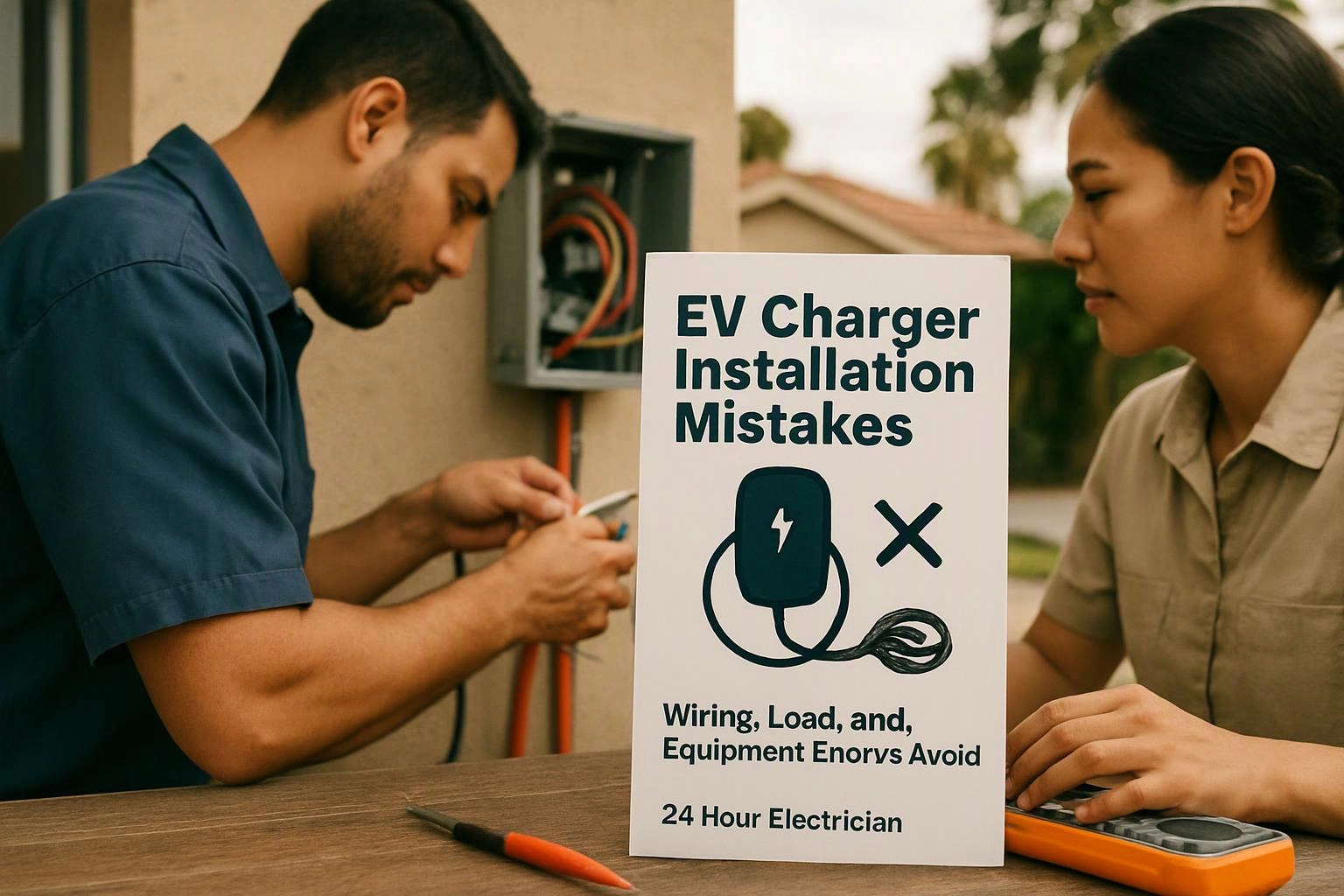
Our team can correct a circuit, complete load-management installation, replace an unsuitable charger, or coordinate backup-power integration. We then test the work and complete charger commissioning before the system is placed in service.
For broader panel concerns, our review may also identify the issues covered in Electrical Panel Upgrade Mistakes: Common Sizing, Scope, and Cost Errors to Avoid.
When to Call Center Electric Service Instead of Doing It Yourself
Call Center Electric Service when the work involves opening the electrical panel, installing a new circuit, correcting repeated charger faults, or integrating EV charging with backup power. These tasks involve regulated electrical work and require testing, protection, and inspection.
What Our EV Charger Installation Estimate Covers
Our EV charger installation estimate covers the electrical assessment, equipment requirements, wiring path, protection needs, and any load-management or backup-power work involved. We use the site conditions and charger specifications to define the work.
The estimate can address charger selection, circuit design, panel capacity, grounding, installation testing, and the critical-load panel when backup power is part of the plan. Free Estimates Available from Center Electric Service help you review the correction or installation scope before work begins.
Request an exact quote through Electric Vehicle Charger Installation inquiries so our team can review the home and equipment.
How to Avoid EV Charger Problems After Installation
EV charger problems are easier to address when you watch the equipment and electrical system after installation. Use the manufacturer instructions and contact us when a warning sign continues.
Questions About EV Charger Installation Mistakes
Can an EV charger share a circuit with other appliances?
An EV charger should not share a circuit unless the complete design supports the combined load and protection requirements. Center Electric Service checks the continuous load, branch circuit, breaker, and wiring before we approve a connection.
Why does an EV charger keep tripping the breaker?
An EV charger may keep tripping the breaker because of an overloaded circuit, incorrect wiring, a fault, or a problem with the charger. We test the circuit, breaker operation, protection, and charger before choosing the correction.
Does an EV charger always need a dedicated circuit?
An EV charger generally needs a dedicated circuit designed for its continuous load and manufacturer requirements. We confirm the circuit design during the electrical load calculation and installation review.
Can load management prevent an electrical panel upgrade?
Load management can reduce peak electrical demand and may avoid a panel upgrade when the service and equipment support that design. We complete the load calculation and select the control method based on the home’s service capacity.
Can an EV charger be connected to a home battery backup system?
An EV charger can connect to a home battery backup system when the charger, transfer equipment, isolation, and critical-load panel are designed to work together. We coordinate the backup-power integration and test the completed system.