When to Replace a Circuit Breaker: Warning Signs of Failure
Circuit breaker replacement is needed when a breaker repeatedly trips, feels hot, shows physical damage, smells burnt, or fails to reset safely; Center Electric Service can inspect the circuit, identify the cause, and replace the breaker when appropriate.
What Does a Circuit Breaker Do?
A circuit breaker is a protective electrical device that interrupts current when a circuit carries an unsafe electrical load or develops a fault.
The breaker sits inside the electrical panel and protects an electrical circuit from overcurrent protection hazards. When current rises beyond a safe level, the trip mechanism opens the circuit to reduce the risk of heat and damage.
Our team checks the breaker, terminal connection, and surrounding panel when protection does not work as expected. We also look for loose connections and faulty wiring that may have caused the breaker to trip.
Which Warning Signs Mean a Circuit Breaker May Need Replacement?
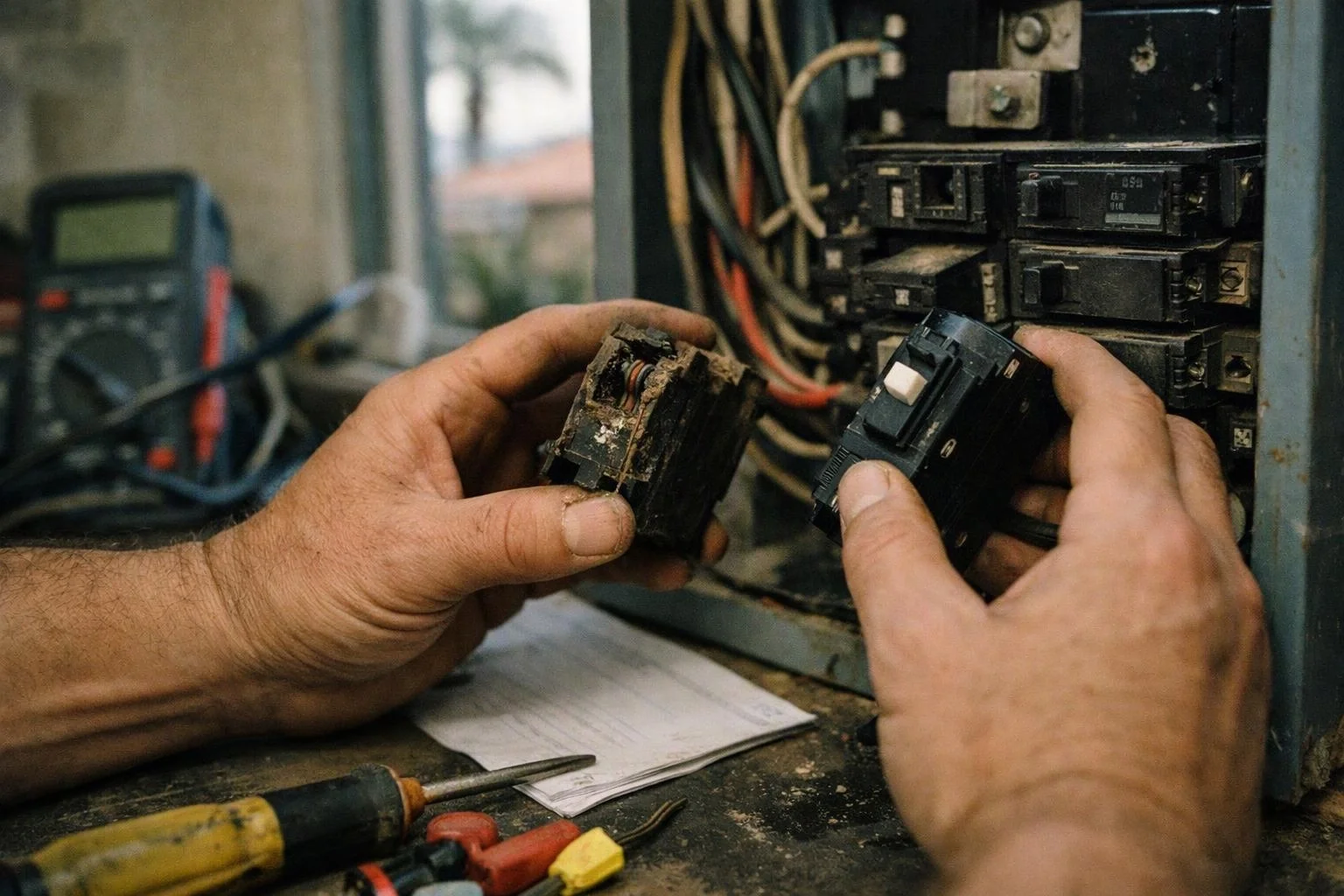
A circuit breaker may need replacement when it repeatedly trips without a clear temporary cause, shows heat or damage, smells burnt, makes unusual noise, or will not reset.
These signs can also point to a problem elsewhere in the circuit. We inspect the full circuit before recommending a replacement breaker.
Stop using a damaged breaker when you notice heat, smoke, a burning smell, or visible damage. Center Electric Service can perform electrical troubleshooting and determine whether the breaker or another part of the circuit needs attention.
When Is a Tripping Breaker a Circuit Problem?
A tripping breaker can indicate an overloaded circuit, a faulty appliance, or a wiring fault, so replacement should follow testing that identifies the actual cause.
An overloaded circuit may trip when connected devices draw more current than the circuit can safely carry. We review the connected load and check whether the circuit needs a different solution.
A short circuit creates a direct path for current and can cause an immediate trip. A ground fault sends current along an unintended path, while a faulty appliance may trip the breaker only when that appliance operates.
Electrical wiring problems can also cause repeated trips, heat, or unusual sounds. Our team uses circuit diagnosis and testing to separate a failed breaker from an overload, short circuit, ground fault, or wiring fault.
How We Confirm a Circuit Breaker Needs Replacement
We confirm circuit breaker replacement by inspecting the breaker and panel, testing the affected circuit, and checking whether the breaker is compatible with the panel and circuit.
Our electrical troubleshooting begins with the reported symptoms and the condition of the breaker handle, trip mechanism, bus bar, and terminal connection. We inspect for heat marks, loose connections, corrosion, and damage inside the electrical panel.
Next, we complete circuit testing to identify an overload, short circuit, ground fault, faulty appliance, or electrical wiring issue. A compatible breaker must match the panel design and the circuit requirements.
We recommend replacement when the breaker has failed or cannot safely protect the circuit. If the underlying issue is elsewhere, our findings guide the needed repair.
What Can You Safely Do Yourself?
You can identify the affected circuit and attempt a careful reset when there is no heat, smoke, burning odor, visible damage, or other immediate hazard. Center Electric Service should handle testing or replacement when a warning sign remains.
Electrical panel access requires caution because energized parts can remain present even when a breaker is off. Do not remove the panel cover or touch wiring, bus bars, or terminals.
| Factor | What you can do yourself | What we do |
|---|---|---|
| Identify the issue | Note which circuit stopped working and what was operating at the time. | We trace the affected circuit and review the reported symptoms. |
| Reset the breaker | Attempt a careful reset only when the panel and breaker show no warning signs. | We test the breaker and circuit when the trip returns or the handle will not stay on. |
| Panel access | Keep the panel closed and avoid touching internal parts. | Our team completes a panel inspection and checks connections safely. |
| Replacement | Do not remove or install the breaker. | We select a compatible replacement breaker and complete connection testing. |
What a Circuit Breaker Replacement Quote Covers
A circuit breaker replacement quote depends on the breaker type and compatibility, the condition of the panel, the cause of failure, and any wiring work needed; we provide free estimates and upfront pricing after assessing the job.
Our assessment considers whether the job involves a single-pole breaker, double-pole breaker, GFCI breaker, AFCI breaker, or another compatible design. Panel condition and the available connection space can also affect the work required.
We explain whether the quote covers electrical troubleshooting, breaker replacement, connection testing, or related wiring repairs. This approach helps you understand what the work addresses before we begin.
How Circuit Breaker Replacement Is Completed
Circuit breaker replacement begins with electrical diagnosis so the new breaker addresses the actual fault. Our crew follows a controlled process that protects the panel and the affected electrical circuit.
What Should You Do When a Breaker Shows Failure Signs?
Stop resetting a circuit breaker that shows heat, smoke, burning odor, damage, or repeated trips, and contact Center Electric Service for electrical troubleshooting and replacement guidance.
Keep people away from a damaged electrical panel and unplug appliances only when doing so is safe. Do not remove the panel cover or try to force a breaker into the on position.
We can inspect the breaker, test the circuit, and determine whether circuit breaker replacement is appropriate. For help with broader panel concerns, our team can also assess conditions described in Signs You Need Electrical Panel Repair.
Circuit Breaker Replacement from Center Electric Service includes a review of breaker compatibility, panel condition, and the cause of the failure. Contact us to request an assessment and use our free estimates and upfront pricing process.
Questions About Circuit Breaker Failure
Can a circuit breaker fail without tripping?
Yes, a circuit breaker can fail without tripping when its internal mechanism, terminal connection, or protective function no longer works correctly. Center Electric Service inspects the breaker and tests the circuit to identify a failure that is not obvious from the handle position.
Should I keep resetting a breaker that keeps tripping?
No, you should not keep resetting a breaker that keeps tripping. Repeated trips can point to an overloaded circuit, faulty appliance, short circuit, ground fault, or wiring problem that needs testing.
Can a faulty appliance cause a circuit breaker to trip?
Yes, a faulty appliance can cause a circuit breaker to trip when it develops an internal fault or draws unsafe current. We test the circuit and review the appliance connection before recommending breaker replacement.
What happens if a damaged circuit breaker is left in place?
A damaged circuit breaker can leave the circuit without reliable overcurrent protection and may contribute to heat or connection damage. Stop using the affected circuit and arrange an inspection when the breaker shows physical damage, a burning odor, or overheating.
Related Resources
Electrical Troubleshooting Process: How Electricians Find and Fix Electrical Problems
Compared ToCircuit Breaker Replacement vs. Electrical Panel Upgrade: What Is the Difference?
Compared ToDIY Electrical Repair vs. Hiring an Electrician: Which Jobs Should You Compare?
How to HireHow to Choose an Electrician for Home Electrical Repairs and Upgrades