Best Electrical Troubleshooting System Types & Equipment Options Compared (2026)
Electrical troubleshooting system types and equipment options suit different fault conditions: multimeters handle basic electrical tests, clamp meters measure current without disconnecting conductors, circuit tracers locate wiring paths, insulation testers assess insulation condition, thermal cameras identify heat patterns, and power quality analyzers investigate voltage or waveform problems. Center Electric Service selects the testing approach based on the symptom, circuit, safety conditions, and evidence needed.
Options at a Glance
Each tool reveals different evidence. We match the equipment to the fault symptom so the diagnostic sequence remains focused and safe.
Which Electrical Troubleshooting System Type Fits the Fault?
The best electrical troubleshooting system type depends on whether the fault involves voltage, current, continuity, insulation, conductor location, heat, or power quality. Our team uses the test that can reveal the evidence needed for the specific electrical circuit.
| Type | Key Features | Best For | Typical Lifespan / Turnaround | Key Trade-Offs | Cost |
|---|---|---|---|---|---|
| Digital multimeter | Voltage, resistance, and continuity tests | Basic circuit testing | Varies by instrument and test scope | Needs test-lead access and correct settings | Varies |
| Clamp meter | Current measurement through a clamp jaw | Load and amperage checks | Varies by instrument and test scope | Does not explain every voltage or wiring fault | Varies |
| Circuit tracer | Signal tracing through wiring paths | Wire tracing and breaker identification | Varies by instrument and circuit access | Results depend on circuit conditions | Varies |
| Insulation resistance tester | Insulation condition and leakage testing | Cable insulation and ground fault investigation | Varies by instrument and isolation needs | Requires controlled isolation and suitable access | Varies |
| Thermal imaging camera | Infrared heat pattern scanning | Overheating and hot connection checks | Varies by load conditions and scan scope | Heat patterns need electrical context | Varies |
| Power quality analyzer | Voltage and waveform behavior | Fluctuation, transients, and harmonic distortion | Varies by recording scope and circuit access | Requires deeper interpretation of recorded data | Varies |
Digital Multimeters for Basic Electrical Testing
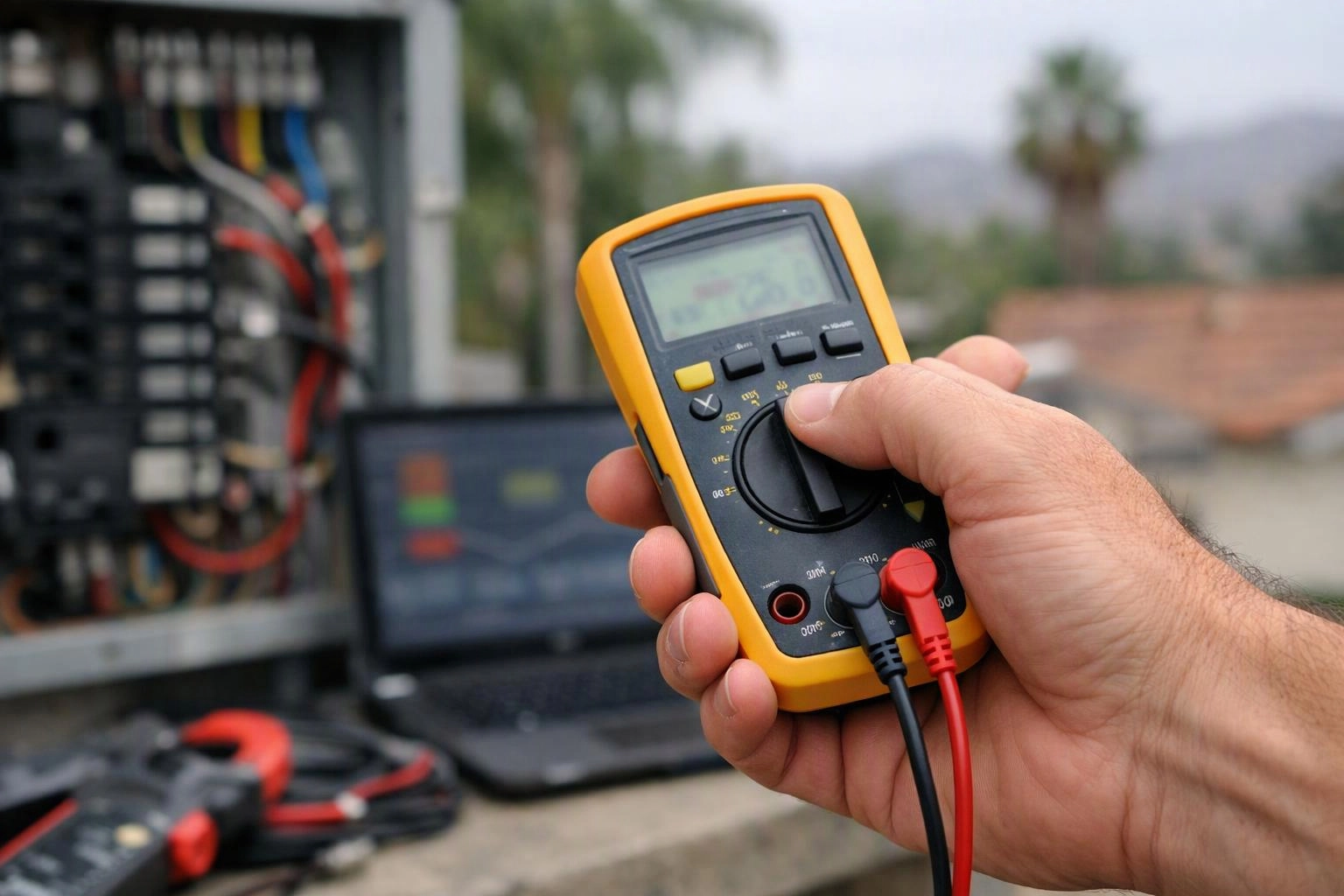
A digital multimeter is a measurement instrument that tests voltage, resistance, and continuity in an electrical circuit. We use test leads to compare expected readings with the circuit symptom and to identify an open path, unwanted resistance, or missing voltage.
A multimeter fits basic fault diagnosis when the circuit is accessible and the test points are understood. It cannot reveal every load, wiring, heat, or power waveform problem by itself.
Clamp Meters for Current Measurement
A clamp meter is a measurement instrument that measures current around an accessible conductor. We use the clamp jaw to examine load behavior without disconnecting the conductor for the current measurement.
This tool fits amperage checks when a circuit appears overloaded or a load behaves unexpectedly. Current readings need to be considered with voltage, conductor condition, and circuit protection.
Circuit Tracers for Locating Wiring Paths
A circuit tracer is a wire-tracing instrument that helps identify a wiring path and its related breaker. We use it on suitable energized or de-energized circuits when wiring is difficult to follow from the breaker panel.
A tracer fits hidden-wire questions and circuit identification. Signal interference, shared paths, and circuit access can affect the result.
Insulation Resistance Testers for Leakage Problems
An insulation resistance tester is a test instrument that assesses resistance through cable insulation. We use insulation testing to investigate insulation breakdown, leakage current, and possible ground fault conditions.
This test fits suspected cable damage or unexplained leakage. We isolate the circuit and protect connected equipment before applying the test.
Thermal Imaging Cameras for Heat Patterns
A thermal imaging camera is an infrared camera that displays heat patterns across electrical equipment. We scan an electrical panel and accessible connections to look for unusual heating linked to a loose connection, overload, or uneven load.
Thermal scanning fits intermittent symptoms, overheating, and visible concern around an electrical panel. Heat images guide further testing but do not replace circuit measurements.
Power Quality Analyzers for Voltage and Waveform Issues
A power quality analyzer is a diagnostic instrument that records voltage behavior and the power waveform. We use power quality testing to investigate voltage fluctuation, harmonic distortion, and transient conditions.
This equipment fits sensitive equipment problems, unexplained resets, and supply behavior that basic tests cannot capture. The recorded pattern must be matched to the affected load and power supply.
How Do Electrical Troubleshooting Equipment Options Compare?
Multimeters offer broad basic testing, clamp meters measure current with limited circuit disruption, tracers locate conductors, insulation testers assess leakage risk, thermal cameras reveal heat patterns, and power quality analyzers investigate supply behavior. We choose based on the fault symptom and the access available.
Test accuracy depends on correct instrument selection, sound test leads or sensors, circuit access, and safe testing conditions. Our Electrical Troubleshooting process combines readings when one test cannot explain the fault.
What Changes the Cost of an Electrical Troubleshooting System?
Electrical troubleshooting cost changes with the equipment required, fault complexity, circuit accessibility, testing depth, and whether corrective repair follows diagnosis. A simple accessible test has different cost drivers from a fault that affects concealed wiring or several circuits.
We explain the diagnostic scope, equipment selection, access needs, and possible repair scope before work begins. Center Electric Service provides Free Estimates Available for the planned diagnostic work, with an exact quote based on the specific conditions.
How We Select and Use Troubleshooting Equipment
Our diagnostic sequence starts with the symptom and ends with test results that support a repair recommendation. We do not treat one instrument as a universal solution.
Which Troubleshooting Tests Can You Safely Perform?
Basic observations and low-risk checks that do not expose you to energized conductors are the only troubleshooting tests most customers should perform themselves. Center Electric Service handles instrument testing when access, isolation, or fault conditions create electrical risk.
You can note which outlets, lights, or appliances are affected and whether a circuit breaker has tripped. Do not remove covers, touch exposed conductors, or use test leads inside energized equipment unless the work is within your training and safe controls.
When Should You Request an Electrical Troubleshooting Estimate?
Request an electrical troubleshooting estimate when the fault is intermittent, affects multiple circuits, repeatedly trips protection, produces heat or odor, or cannot be isolated safely. These conditions can require more than a basic continuity test or voltage check.
We define the diagnostic scope around the symptom, circuit access, required instruments, and possible repair work. Center Electric Service provides Free Estimates Available for planned diagnostic work, so you can request an exact quote for the conditions at your property.
Questions About Electrical Troubleshooting Equipment
What is the most useful electrical troubleshooting tool?
Center Electric Service selects the most useful tool based on the fault evidence required. A digital multimeter fits basic voltage, resistance, and continuity checks, while other symptoms may require current, heat, insulation, or power quality testing.
Can a multimeter find every electrical problem?
No, a multimeter cannot find every electrical problem. A multimeter can test voltage, resistance, and continuity, but current behavior, heat patterns, insulation leakage, and waveform problems may require other equipment.
When is a thermal camera useful for electrical troubleshooting?
A thermal camera is useful when unusual heat may point to a loose connection, overload, or uneven load. We use the heat pattern to guide additional circuit testing and do not treat the image as a complete diagnosis.
What equipment locates a hidden electrical wire?
A circuit tracer locates and follows a suitable hidden electrical wire path. We select the tracer method based on whether the circuit is energized or de-energized and on the wiring access available.
Why would electrical troubleshooting require more than one test instrument?
Electrical troubleshooting may require more than one test instrument because voltage, current, continuity, insulation, heat, and waveform tests reveal different parts of a fault. We combine suitable results to improve diagnostic accuracy and support the repair recommendation.
Related Resources
Signs You Need Electrical Panel Repair
When You Need ItWhen to Replace a Circuit Breaker: Warning Signs of Failure
How It WorksElectrical Troubleshooting Process: How Electricians Find and Fix Electrical Problems
Compared ToDIY Electrical Repair vs. Hiring an Electrician: Which Jobs Should You Compare?